- Best for
- Modern living room polish
- Cost
- Under $800
- Difficulty
- Moderate
- Time
- One weekend + dry time
Why charcoal-and-sand layering is the living room of 2026
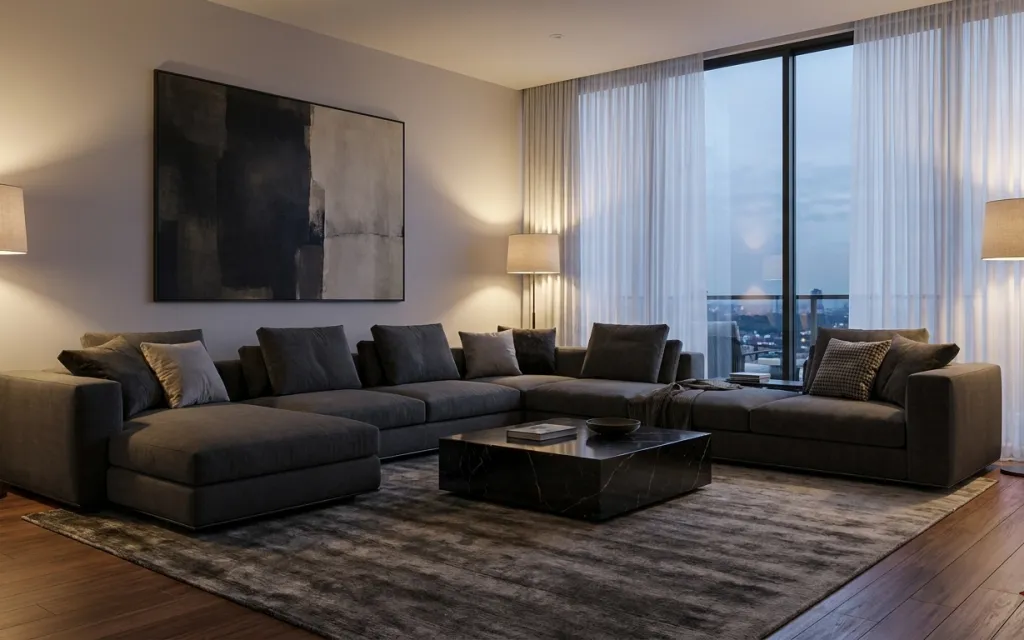
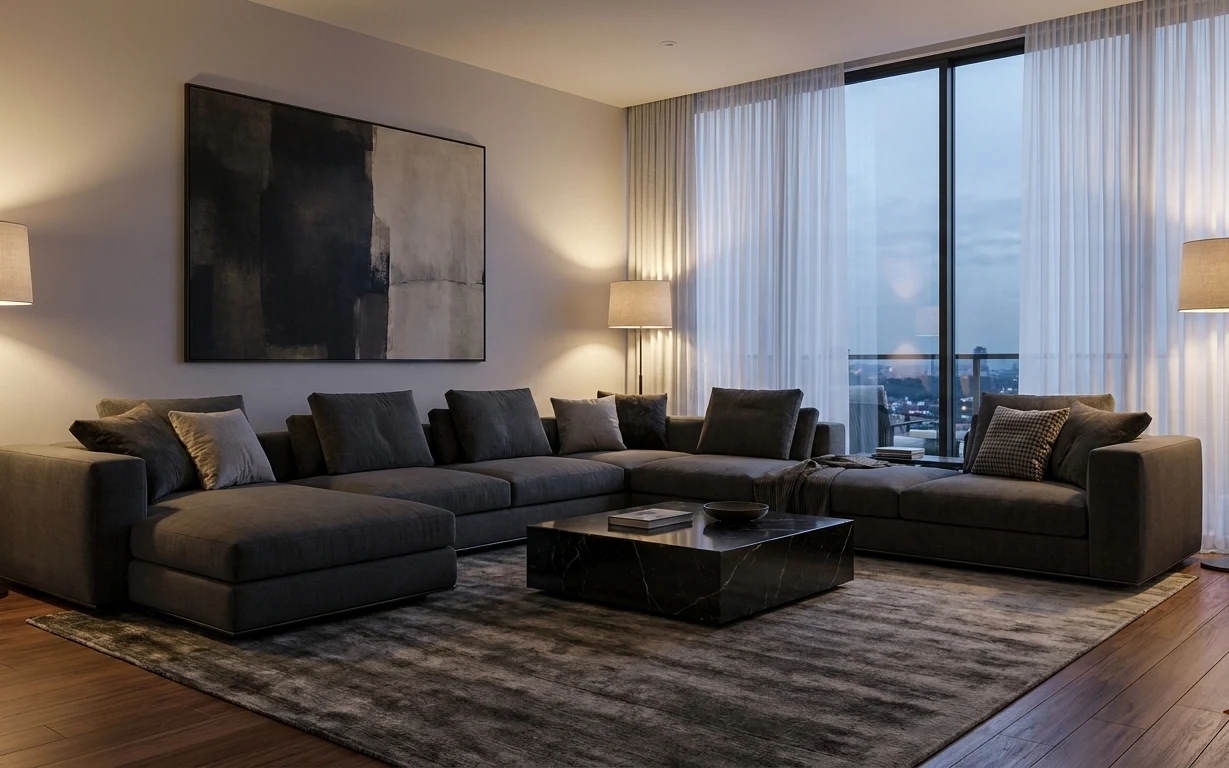
That low-slung gray sectional reads heavier than it is—until the room gets soft, layered “anchors.” Here, the large gray area rug grounds the furniture while the white sheer curtain panels keep daylight airy instead of flat. The black rectangular coffee table adds contrast, and the large framed abstract wall art gives the wall structure without feeling like clutter. Two beige fabric-shaded floor lamps bring a warm layer you can actually feel after sunset. For a homeowner refresh, this is a weekend-friendly way to make the room look intentional without touching anything structural.
I almost went “matchy” with all the grays on my last update. Then I remembered: the best-looking neutrals usually have one darker, one brighter, and one warm note that shows up in lighting. On this setup, the warm tan lamp shades are that quiet third player, while the rug’s muted gray keeps the charcoal details from feeling too harsh. Once I let myself mix light and dark, the whole room stopped looking like it was waiting for something.
Layer 1 — large gray area rug ($200) Hides daily life while adding softness underfoot
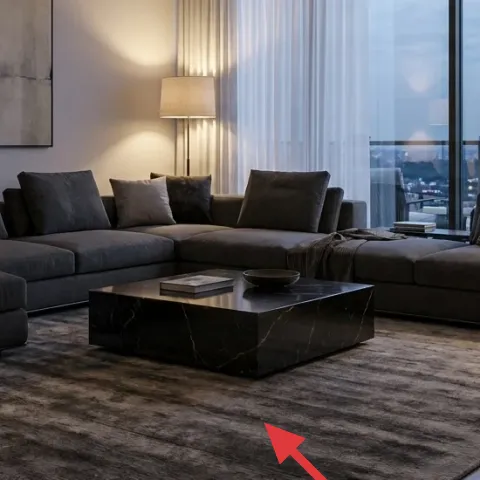
A big gray rug is what turns this layout from “furniture in a room” into a single, connected scene. In the photo, the rug sits wide enough to catch the front legs of the sectional, which is why the sofa doesn’t look like it’s floating on the hardwood. If you go smaller, the room usually feels chopped up—like you’re seeing the floor before you’re seeing the seating. The trade-off with a muted gray is that it shows less dust than a bright cream, but it still lets black and warm lamp tones pop.
Choose a rug size that tucks under the sofa edges
For sectional rooms, aim for the rug to land under at least the front legs so the seating reads as one unit.
Layer 2 — black rectangular coffee table ($180) Adds contrast that keeps neutrals from blending
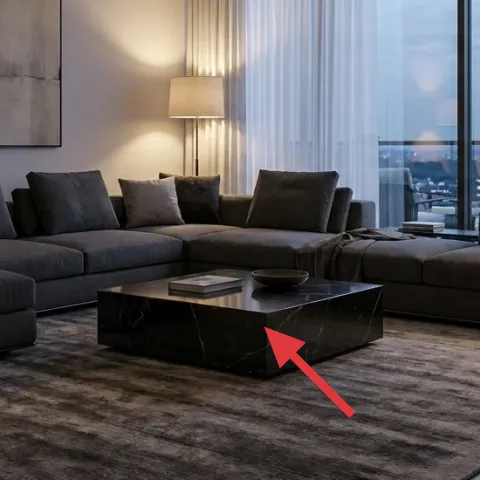
This black coffee table gives the room the visual “spine” the eye needs. Because everything else is in soft grays and light fabric, the crisp rectangle stands out without adding more pattern. The glossy, stone-like surface in the photo also reflects lamp light, so the table looks deeper after dark. The obvious alternative would be another light wood or beige top, but that would make the center of the room feel flatter against the gray sofa. The trade-off: black surfaces can show water rings, so using coasters for daily drinks is the small habit that keeps it looking sharp.
Think of the table as your contrast, not just a surface
When the rug and sofa are both neutral, one darker piece near the center helps your layout read faster.
Layer 3 — large framed abstract wall art ($80) Pulls the gray palette up to eye level
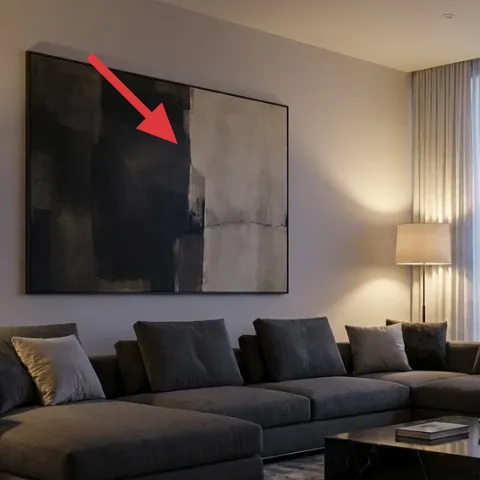
The large framed abstract wall art balances the room’s long horizontal lines from the sectional and curtains. It’s also doing something practical: it gives your eyes a stopping point so the wall doesn’t feel blank or “unfinished” above the sofa. The frame edge and the mixed dark-to-light fields match the charcoal-and-sand vibe already in the room, without requiring you to add more colors elsewhere. The alternative—small prints—would be too fussy at this scale and would fight the sofa’s width. Here, the trade-off is spending on one bigger statement piece instead of building a multi-frame wall.
Don’t hang it too low
In sofa-centered living rooms, keep the art’s center roughly at eye level to avoid that crowded “corner of the wall” feeling.
Layer 4 — white sheer curtain panels (right side) ($80) Lets daylight stay soft and flattering
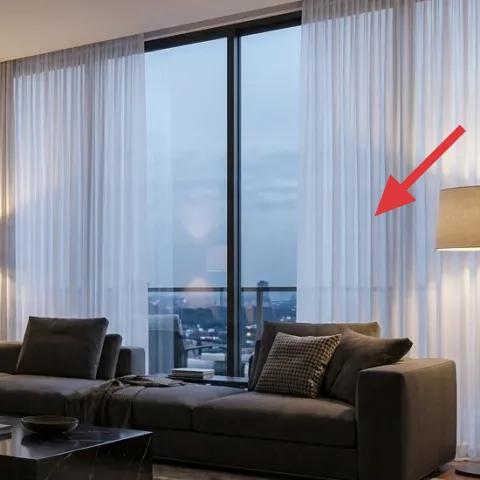
These white sheer curtain panels are what keep the room from going cold and overly gray. In the photo, the sheers filter the window light into a gentle, even glow, which makes the beige lamp shades look warmer after sunset. The panels also add vertical texture behind the sectional, so the room feels taller and more finished than a bare-window look. The trade-off is privacy: sheers mean you’ll still need evening coverage, especially if neighbors are close. For a homeowner refresh, this is still one of the easiest “high impact” changes because you can swap curtain panels without redoing anything major.
Hang sheers high to extend the window line
Mounting closer to the ceiling makes the panels feel more intentional and less “sleeve-like” at the top.
Layer 5 — floor lamp with beige fabric shade (left) ($120) Adds warm light where overhead can’t
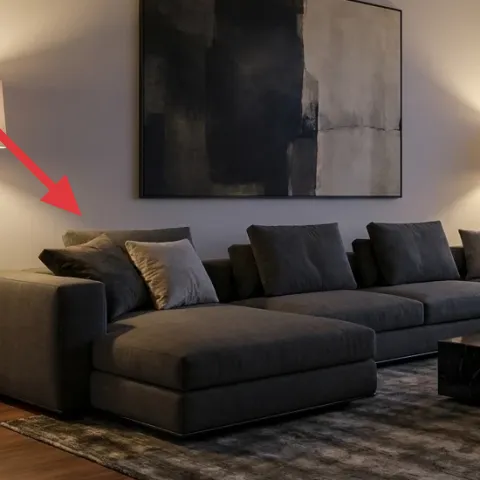
The left floor lamp’s beige fabric shade is the warm counterweight to the room’s black and cool grays. Because the lamps are tall, they also keep the lighting layered at different heights—vital when you have a low sectional with lots of horizontal surface. The shade spreads light softly, so you don’t get harsh hotspots on the wall or coffee table. Swapping to a single brighter bulb would look “tasky,” not lounge-worthy. The trade-off with fabric shades is dust: you’ll want a simple occasional wipe or gentle vacuuming so the light stays even.
Use lamp warmth to make grays feel livable
When your main palette is gray, warmer lamp light helps the room feel less sterile.
Layer 6 — floor lamp with beige fabric shade (right) ($120) Balances the window side and smooths shadows
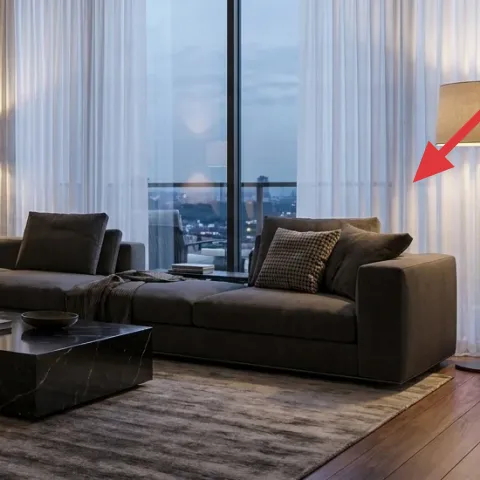
Having a second beige-shaded floor lamp on the right side matters more than it sounds. It visually balances the window wall with the opposite side of the seating area, and it smooths out the shadows cast by the coffee table and sectional cushions. In this photo, that even lighting is part of why the room feels calm instead of contrasty. The obvious alternative would be one lamp plus a small table lamp, but that tends to concentrate light near surfaces and leave corners darker. The trade-off with two floor lamps is giving up some floor space, though in exchange you get a more intentional, symmetrical rhythm.
Keep lamps at roughly the same visual height
Mirroring height keeps the room looking designed, even with a minimalist palette.
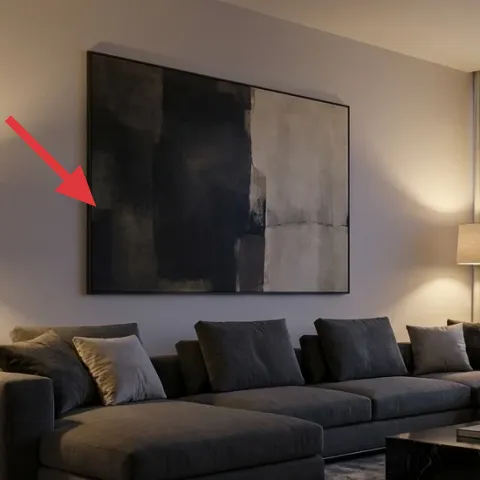
Layer 7 — light gray painted walls ($70) Makes the black-and-gray scheme feel cohesive
Make it instead of buying it
Painting the walls a light gray locks in the same cool-neutral backdrop so the rug, curtains, and black table look intentionally matched.
Materials
- Interior paint, 1 gallon — 1 — paint store — $40
- Roller cover (9-inch) — 2 — hardware store — $8
- Tray liners — 2–3 — hardware store — $3
- Painter’s tape — 1 roll — hardware store — $8
- Plastic drop cloth — 1 — hardware store — $5
Steps
- Clear the wall area and lay down a plastic drop cloth to protect the floor.
- Clean the walls with a damp cloth so paint sticks to dust-free surfaces.
- Patch any scuffs or small holes with spackle, then let patches dry until hard.
- Sand patched spots smooth and wipe away sanding dust.
- Tape edges around trim and window lines with painter’s tape for crisp borders.
- Cut in along corners and trim with an angled brush, then roll the main wall areas.
- Apply a second coat if the gray needs more coverage, letting each coat dry fully.
- Remove tape while paint is still slightly firm to prevent peeling, then touch up any thin spots.
Total DIY cost: $64 — saves about $6 over buying.
Go slightly lighter than you think
Light gray keeps the room bright next to white sheers and warm lamp shades, especially in Brooklyn winter light.
The cost, layer by layer
| Layer | Item | Cost |
|---|---|---|
| 1 | Large gray area rug (5×7) | $200 |
| 2 | Black rectangular coffee table | $180 |
| 3 | Large framed abstract wall art | $80 |
| 4 | Curtain panel pair, white sheer | $80 |
| 5 | Floor lamp with beige fabric shade (left) | $120 |
| 6 | Floor lamp with beige fabric shade (right) | $120 |
| 7 | Interior paint, 1 gallon (light gray) | $70 |
| Total | $750 | |
If you want a cheaper version, downsize the wall-art budget first by swapping to a single framed 16×20 print ($25) and pairing it with one extra large throw pillow cover ($12). Keep the rug and curtains—they’re doing the heavy visual lifting.
What worked, what didn't (across the whole room)
This palette works because it balances cool neutrals with warm, fabric light. The rug and curtains create softness, while the black coffee table and framed art provide contrast and structure.
What worked
- The large gray rug anchors the sectional so the seating reads as one deliberate zone.
- White sheer curtains soften window glare and make gray feel brighter instead of heavier.
- Warm beige lamp shades reduce contrast and keep the coffee table from looking too stark.
- Large abstract wall art fills the main wall span without adding clutter.
- The black coffee table gives the center a crisp focal point against the gray cushions.
- Using one cohesive neutral family makes pillow colors feel curated, not random.
What didn't
- A smaller rug size would have visually chopped the room and made the sectional look unsupported.
- Skipping lamp height would leave corners dim and make the wall art feel “floating.”
- Wall paint that’s too cool can make the room look gray-on-gray instead of layered.
- Choosing a table with a matte black top would have dulled the warm light effect.
- Hanging sheers too low would shrink the window line and make the room feel shorter.
What we'd skip if we did it again
Skip buying a bunch of small décor items before the big anchors are in. Once the rug, curtains, and coffee table are right, styling becomes obvious—and you won’t waste money on “filler” pieces that don’t solve the layout.
Skip mismatched lamp shades. If one shade is more linen, or the height is off, the warm-light effect gets uneven and the room starts to feel accidental rather than composed.
Skip going darker on the wall paint than needed. Light gray gives you the same modern mood as a deeper tone, but it protects daylight softness from getting swallowed by black furniture and shadowy corners.
Frequently asked
How long does this kind of living room refresh take?
If you’re only swapping the rug, coffee table, framed art, and curtains, plan for a few hours to half a day. Painting usually adds one full day plus drying time, and you’ll need a bit of setup/cleanup time for tape and drop cloths. Overall, it’s very doable in a weekend as long as paint drying and touch-ups don’t run late.
Can renters do the same look without painting?
Yes—keep the rug, coffee table, framed art, and floor lamps exactly as-is. For the walls, use framed art placement and lighting to create the “cohesive backdrop” feeling without changing paint. For window softness, sheer panels with a standard curtain rod work well for renters because they don’t require permanent alterations.
What if my room is smaller than the photo?
In a smaller living room, the rug is the first place to adjust: aim for the biggest rug size that still leaves an even border in front of the sofa. Curtains should still hang high to keep the room feeling taller. If wall space is tight, consider the same framed-art scale but center it above the main seating line so the wall doesn’t look empty.
What if my room is larger—do I still use the same curtain and art sizes?
For larger rooms, use the same “one anchor per wall zone” logic: bigger rug, larger framed art, and curtains that reach closer to the ceiling. Two floor lamps can also help, because one light source tends to leave corners visually hollow in bigger square footage. The key is proportional scale—make the anchors large enough to hold the layout.
Where can I shop to stay on budget?
For rugs and framed art, compare big-box home stores with online retailers that show exact sizes. Floor lamps and coffee tables are often easier to find in the same neutral palette through marketplaces and lighting-focused retailers. Curtains are usually best bought as panel sets so you get the width you need for proper fullness.
Biggest mistake people make with this gray-and-black style?
The biggest mistake is going too flat on lighting. Gray furniture and black surfaces look best when you add warm, fabric-shaded light at more than one height. If you only rely on overhead lighting or skip the sheers, the room reads harsher and more contrasty than intended.
More in Living Room
Under $800: modern living room refresh with curtains and rug
A modern living room refresh under $800: start with a large gray rug, sharpen the look with a black coffee table, and soften daylight using…
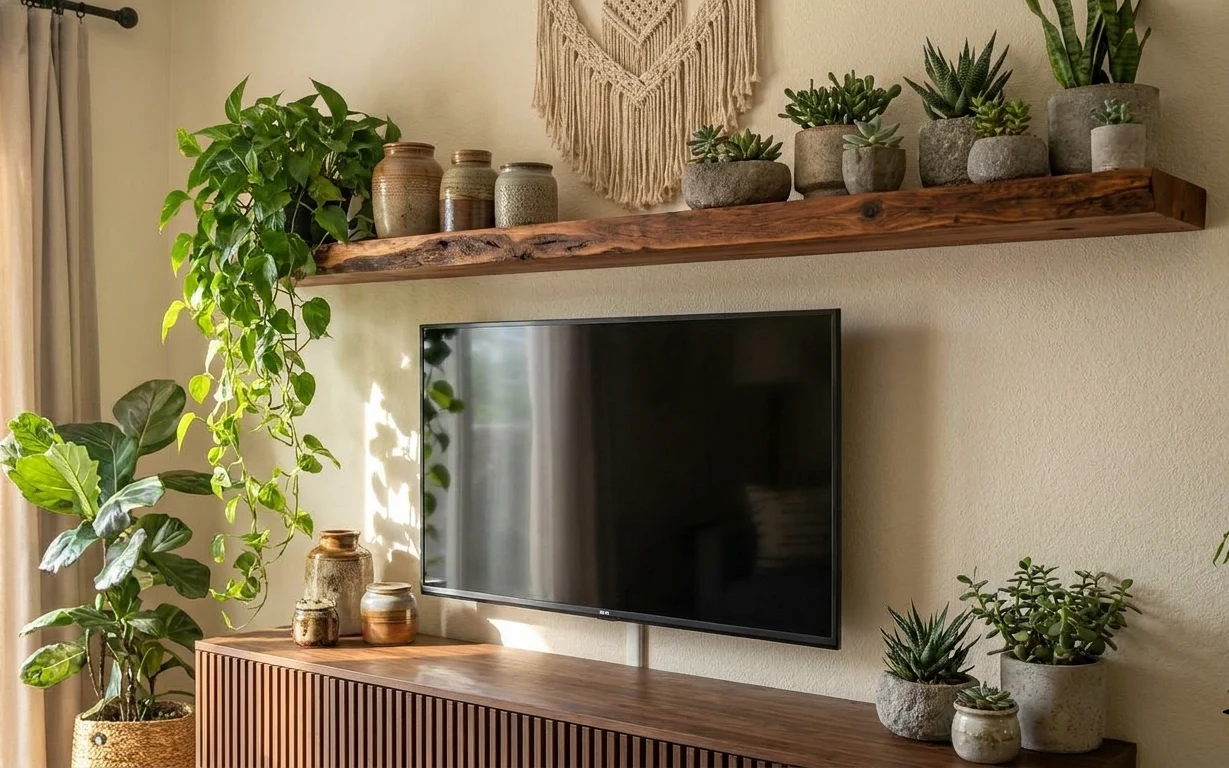
Under $500: move-ready TV plant wall with warm earth tones
A TV plant wall refresh for shared housing: curtains, macramé, a wood media console look, and layered planters that pack up in boxes. This …
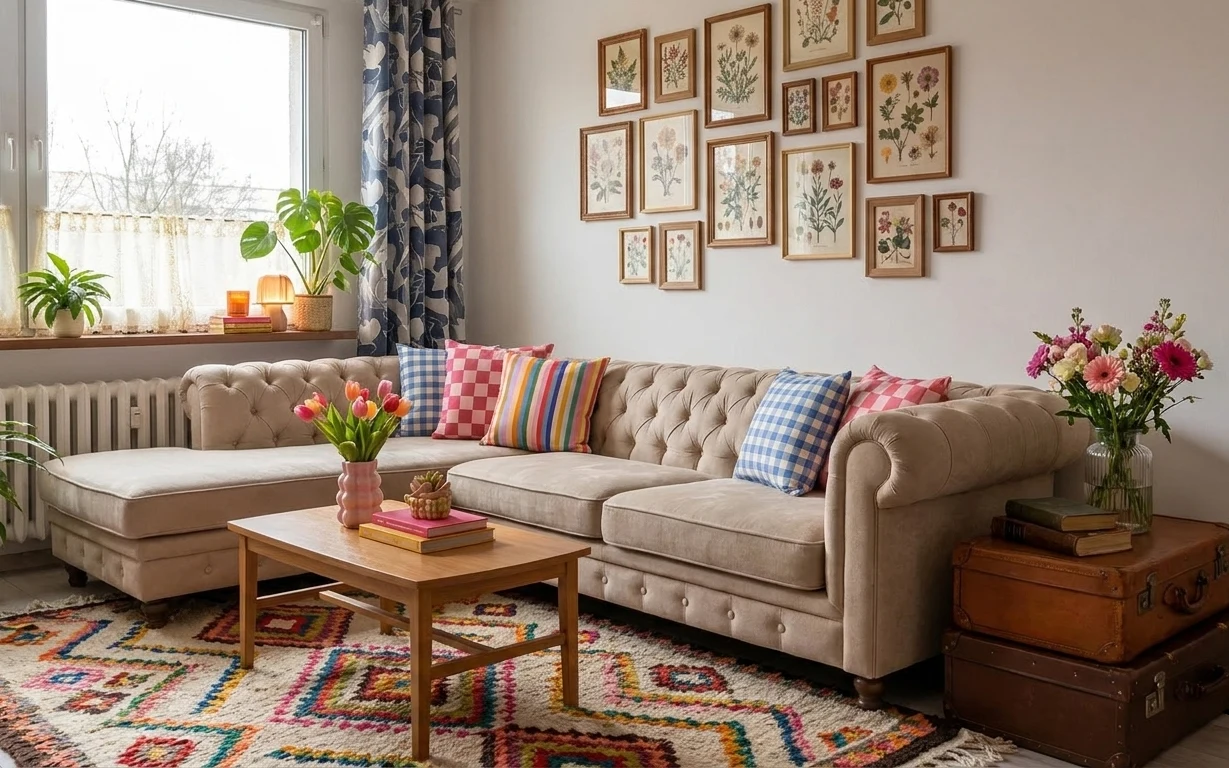
Under $350: a renter-friendly sofa-corner refresh with color
A renter-friendly sofa-corner refresh that brings boho color and structure using a patterned rug, blue curtains, a plug-in lamp, and a sing…