- Best for
- Busy weekdays + weekend-visible payoff
- Cost
- Under $800 total
- Difficulty
- Moderate DIY (mostly textiles + styling)
- Time
- 1–2 weekends
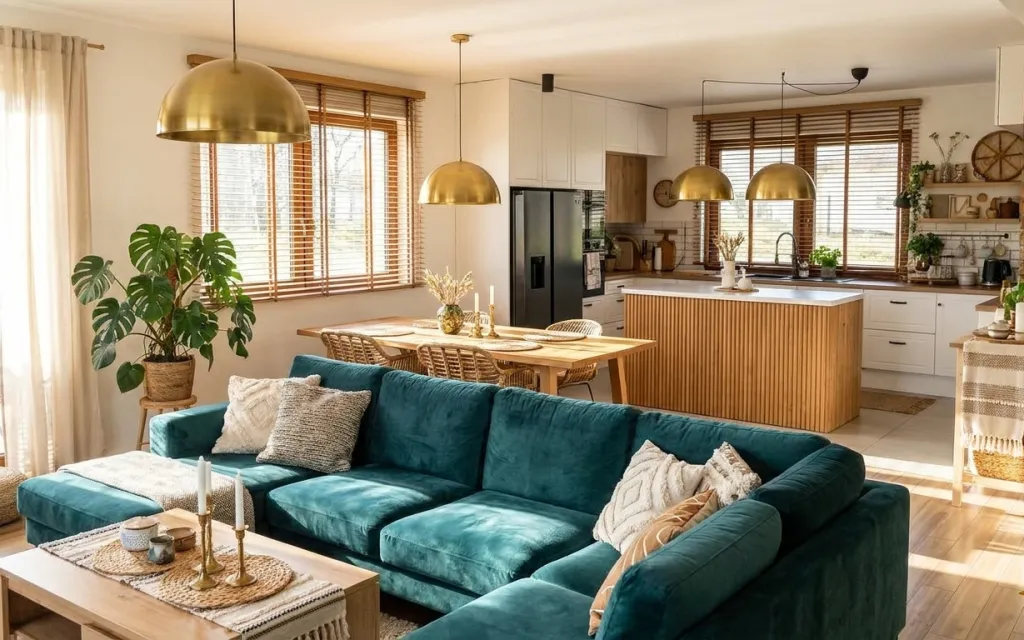
Why brass-and-wood weekend details are the teal sofa living room of 2026
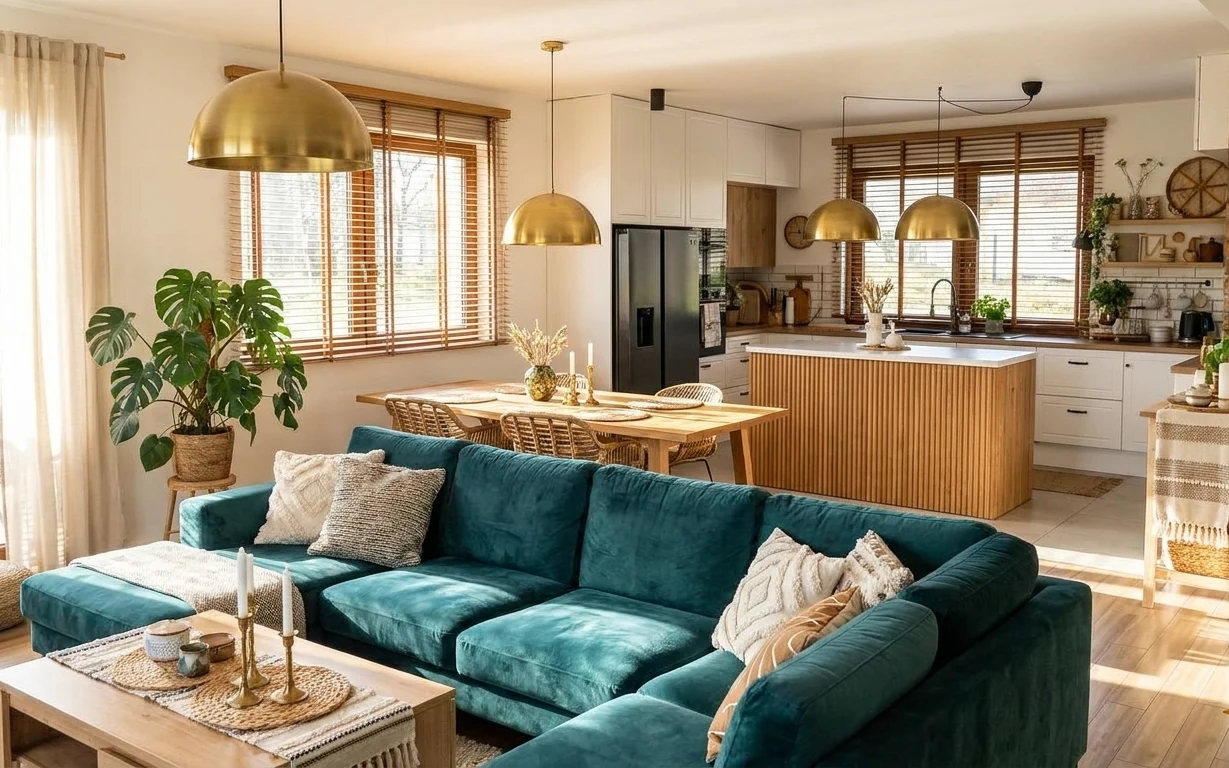
The photo already has the hard part done: a deep teal sofa, warm wood, and that repeated brass dome lighting. What makes it read finished is the mix of textures—beige rug fibers under clean lines, sheer curtains that brighten the edges, and soft throw pillows that visually break up the sofa’s big block. The plant brings in an earthy counterweight to the bold color, while the tray-and-candles styling adds height and rhythm. For homeowners, the sweet spot is choosing changes with the highest payoff: textiles first, then lighting and small objects.
I used to think “teal is enough” and stop there. Then I caught myself staring at my own living room and realizing the teal was competing with everything else because nothing tied back to the brass tones. When I started repeating warm metals (even just through lighting and small hardware-like accents), the whole space snapped into place. That’s the same principle here: match warmth across categories—soft goods, light, and decor—so the room feels composed instead of simply colorful.
Layer 1 — beige area rug ($200) Defines the whole color palette
A beige area rug anchors the teal sofa and gives the eye somewhere calm to land. In the photo it also creates a gentle buffer between the wood floor and the sofa’s saturated color, which is why the room doesn’t feel heavy. Choosing a medium-tone neutral also helps the brass dome lights look warmer rather than harsh. The trade-off is that you’ll want a rug with texture (not a flat, silky look), because texture hides everyday dust and makes the beige feel warmer in daylight. If the current rug is too small, the fix is sizing up—not switching styles.
Rug placement that actually works
Try for the front legs of the sofa (and at least two legs of the coffee-table-side seating) to land on the rug so it reads as the shared foundation.
Layer 2 — sheer white curtain panel ($80) Makes daylight feel intentional
Sheer white curtain panels soften the left edge and keep the room bright, which matters when you have bold color on the main seating. The photo shows how the sheer fabric diffuses window light, reducing contrast between the bright outdoors and the darker sofa. The best part of this layer is that it’s mostly about drape and placement, not expensive fabric—hang it so it pools just slightly or hits the floor cleanly. The trade-off is that sheers aren’t privacy-heavy, so they work best if your windows already face a reasonable distance or you pair them with blinds as shown.
Angle matters more than hemline
Even a simple sheer looks elevated when it’s evenly hung and gathered, instead of stretched flat from the rod.
Layer 3 — throw pillows on sofa ($60) Breaks up the teal block
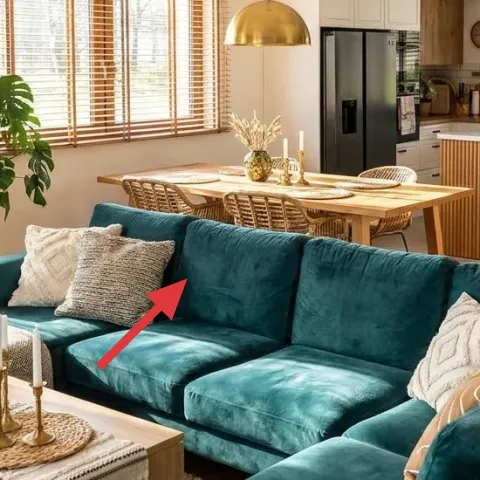
Throw pillows do the small-scale job that walls can’t: they add break lines within a large upholstered piece. Here, the pillows sit on top of the teal velvet so the sofa reads layered rather than monolithic, and the textures (knit or woven-looking covers) bring that modern farmhouse feel without adding clutter. The obvious alternative is just adding more color—more prints, more pattern—but that can fight the room’s already-strong brass lighting. Instead, keep the palette neutral and texture-forward, so the teal stays the star while the pillows provide relief and comfort.
Use texture, not just color
Choose at least one pillow with a visible weave or nubby finish so it catches light differently across the day.
Layer 4 — decorative tray on coffee table ($35) Creates a styling “center of gravity”
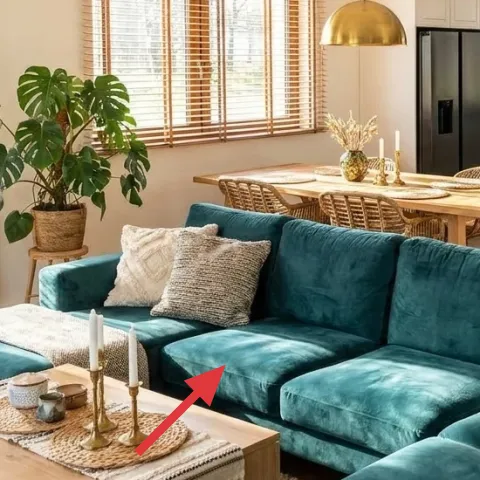
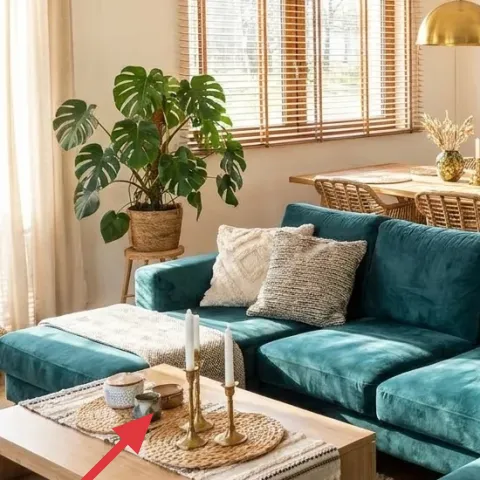
A decorative tray makes the coffee table look styled on purpose, especially in rooms where the table is light wood and the sofa is dark. In the photo, the tray gives the candles a stage and keeps the small items from drifting around the tabletop. This is the kind of swap that feels subtle, then you realize it fixes three problems at once: spacing, visual clutter, and scale. The trade-off is that a tray means you need to curate what sits on it—if you overfill, it reads busy rather than intentional. Aim for a few objects with different heights and one repeating material (like brass-toned candleholders).
Don’t skip the “one height rule”
If every object is the same height, the tray looks like storage. Keep at least one item taller and one lower for depth.
Layer 5 — candles on decorative tray ($30) Adds warm points where your eye pauses
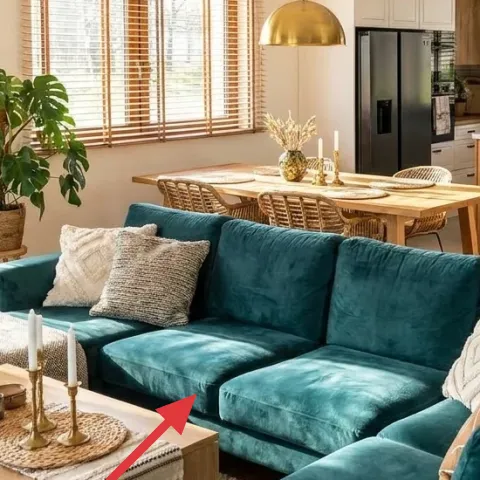
Candles are small, but they’re doing big work: they repeat warmth and add a soft glow cue that matches the brass pendants. The cluster on the tray creates visual rhythm across the coffee table, so your eye isn’t only bouncing between the sofa and the kitchen. This layer is also practical—if you keep one unscented candle and swap scents seasonally, the room can shift without changing anything larger. The trade-off is safety and maintenance: keep the flame away from curtains and don’t burn all day when the window light is already doing the decorating.
Pick a color family that matches the metal
Warm candleholders (brass, champagne, or amber glass) look most cohesive with dome pendants like the ones above the island.
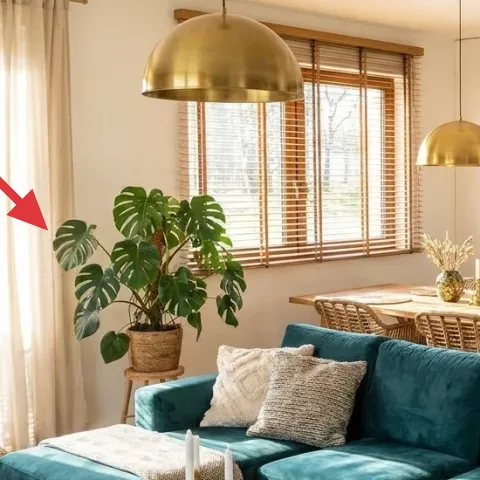
Layer 6 — terracotta plant pot under indoor floor plant ($40) Makes the plant feel styled
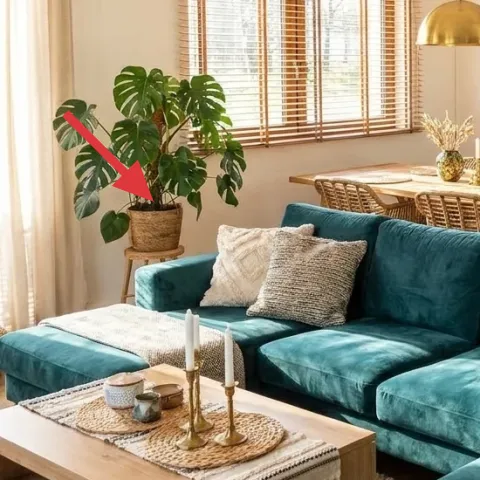
Make it instead of buying it
Paint the terracotta plant pot in a warm neutral so the plant reads as part of the palette, not just a natural accent.
Materials
- Primer for terracotta/ceramic (spray can) — 1 can — store hardware aisle — $12
- Chalky matte paint (warm white or oat) — 1 small sample — craft paint section — $8
- Painter’s tape — 1 roll — hardware store — $6
- Disposable gloves + fine sandpaper (220-grit) — 1 pack — hardware store — $4
Steps
- Clean the pot with warm water, then let it dry fully.
- Lightly scuff the surface with 220-grit sandpaper to help primer grip.
- Mask any rim you want to keep unpainted with painter’s tape.
- Spray an even coat of primer and let it dry per the can instructions.
- Apply 2 thin coats of matte paint, letting each coat dry fully.
- Remove tape while paint is just slightly tacky so edges stay crisp.
Total DIY cost: $30 — saves about $10 over buying.
Layer 7 — brass dome pendant lights ($260) Reinforces the warm ceiling note
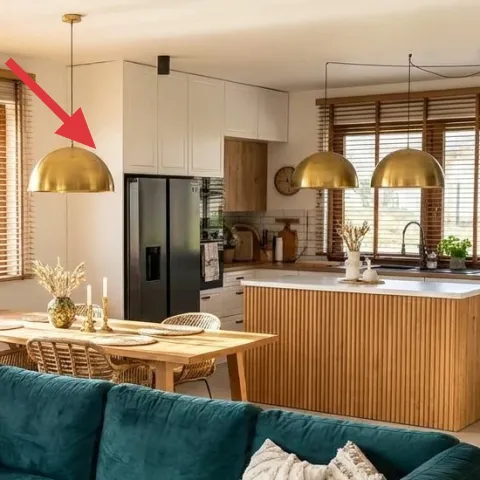
Brass dome pendant lights pull the kitchen-and-living area together because they repeat warm metal tones across the room. In the photo, those domes sit above both the dining table and the island area, so they act like a visual thread between zones. This layer works best when the finish reads consistent—same brass color family, not mixed silvers or overly cool metals. The trade-off is cost: lighting is more expensive than textiles, but swapping one pendant (or replacing the most visually dominant one) gets you most of the payoff without overhauling the whole ceiling.
Swap just the one you notice most
If multiple domes exist, update the closest-to-sofa pendant first so your eye catches it every time you sit.
The cost, layer by layer
| Layer | Item | Cost |
|---|---|---|
| 1 | beige area rug | $200 |
| 2 | sheer white curtain panel (pair) | $80 |
| 3 | throw pillows on sofa (set of 2 covers) | $60 |
| 4 | decorative tray on coffee table | $35 |
| 5 | candles on decorative tray (set) | |
| $30 | ||
| 6 | terracotta plant pot under indoor floor plant (painted look) | $40 |
| 7 | brass dome pendant lights (single pendant swap) | $260 |
| Total | $705 | |
A cheaper variant swaps the rug for a smaller jute look ($120) and chooses off-white sheers on sale ($50). Keep the tray-and-candle cluster, and paint the plant pot for the same DIY effect—then spend the rest of the budget on updating just one brass dome pendant.
What worked, what didn't (across the whole room)
The combination of beige textiles, sheer window softness, and brass-repeat lighting makes the teal sofa feel intentional instead of loud. Small-styling items—the tray, candles, and the painted pot—help the coffee table feel “done” without adding visual clutter. The biggest risk with this palette is overdoing pattern when the room already has strong shapes from the pendants and furniture.
What worked
- The beige area rug toned down the teal sofa while still keeping the room bright.
- Sheer white curtain panels softened window contrast so the daylight read calm.
- Throw pillows on the sofa added texture and break lines against the velvet upholstery.
- The decorative tray anchored the coffee-table styling and stopped small items from scattering.
- Candles on the tray echoed the brass dome lighting and gave warm eye-stops.
- A painted terracotta plant pot made the indoor floor plant feel like part of the scheme.
What didn't
- Too-small rug sizing made the sofa float and made the coffee table look disconnected.
- Adding extra patterned pillows would’ve competed with the pendant domes’ strong silhouettes.
- If the sheer panel length hits too high, it makes the ceiling feel lower and cuts brightness.
- Mixing cool-metal candleholders with brass pendants created an obvious mismatch.
- Overfilling the tray reduced height variation and made the table look crowded.
What we'd skip if we did it again
Skip a bold, high-contrast patterned rug. In a teal sofa living room with brass dome pendant lights, pattern can stack too quickly—especially once curtains and throw pillows are added. A textured beige rug keeps the palette cohesive and lets the sofa remain the focal point.
Skip adding more “stuff” to the coffee table. Instead of scattering candles, books, and decor, stick to one decorative tray and a tight cluster with different heights. That single styling decision is what keeps the wood coffee table from looking cluttered.
Skip replacing multiple ceiling fixtures at once. Update the brass dome pendant you notice most from the sofa first, then live with it for a week. You’ll see whether the finish warmth is truly what you want before spending on the rest.
Frequently asked
How long does this kind of weekend refresh usually take?
Plan for about 6–10 hours total if you’re ordering ahead for the rug, curtains, and pillow covers. The curtain hang time is the big variable (rod height and getting the drape even). The painted terracotta plant pot is usually a half-day project plus dry time—most of the timeline is waiting for primer and paint to cure.
Can this work in a rental where I can’t change the ceiling?
Yes. Keep the brass dome pendant lights as-is and put the budget into the rug, sheer white curtain panel, and pillow covers. The photo’s cohesion comes from warmth repetition and texture, not from an actual fixture swap. For the plant pot, DIY-painting is renter-friendly if you use removable methods where possible and avoid permanent damage.
What if my living room is smaller than this one?
Use the same order of priorities: rug first, then curtains for vertical softness, then pillows. In a smaller space, choose a rug that’s as wide as the seating area can handle and hang sheers from close to the ceiling (or as high as your hardware allows). Keep the tray-and-candles cluster minimal so it doesn’t dominate the tabletop.
What if my ceilings are very high?
Go longer on curtain length and increase the visual “drop.” Instead of keeping sheers short, hang them so they reach the floor or lightly puddle for the most proportional softness. For the brass dome pendant lights, prioritize scale—choose a size that doesn’t look tiny against the ceiling. The goal is matching visual weight, not just brightness.
Where should I shop for these exact kinds of items?
For rug + curtain basics, look at mainstream home retailers and big-box online stores for immediate shipping, then refine with a local fabric shop for sheers. Pillow covers and candle sets are easiest to find in bundles so you can match texture tones. For the painted terracotta plant pot look, choose a primer-rated paint and matte finish so it stays neutral in daylight.
What’s the biggest mistake people make with a teal sofa color palette?
The most common mistake is adding too many competing accents—bright pattern, multiple metal finishes, or a rug that’s too small. Teal already pulls attention, and brass dome pendant lights add a strong shape element. The fix is repetition: keep metals in one warm family and stick with a beige neutral rug plus texture-driven pillows.
More in Living Room
Under $800: weekend refresh for a teal sofa living room
A teal-sofa living room with brass pendants, sheer curtains, and a beige rug can feel polished fast. This weekend plan uses 7 visible swaps…
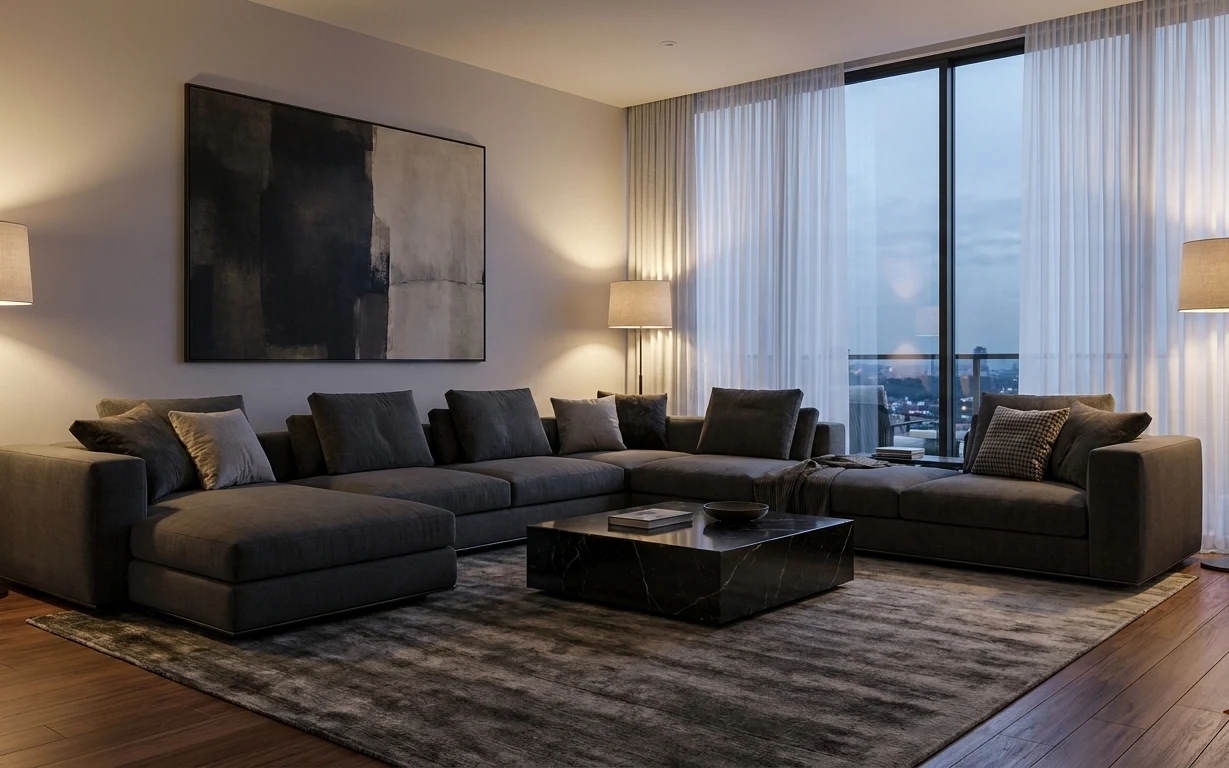
Under $800: modern living room refresh with curtains and rug
A modern living room refresh under $800: start with a large gray rug, sharpen the look with a black coffee table, and soften daylight using…
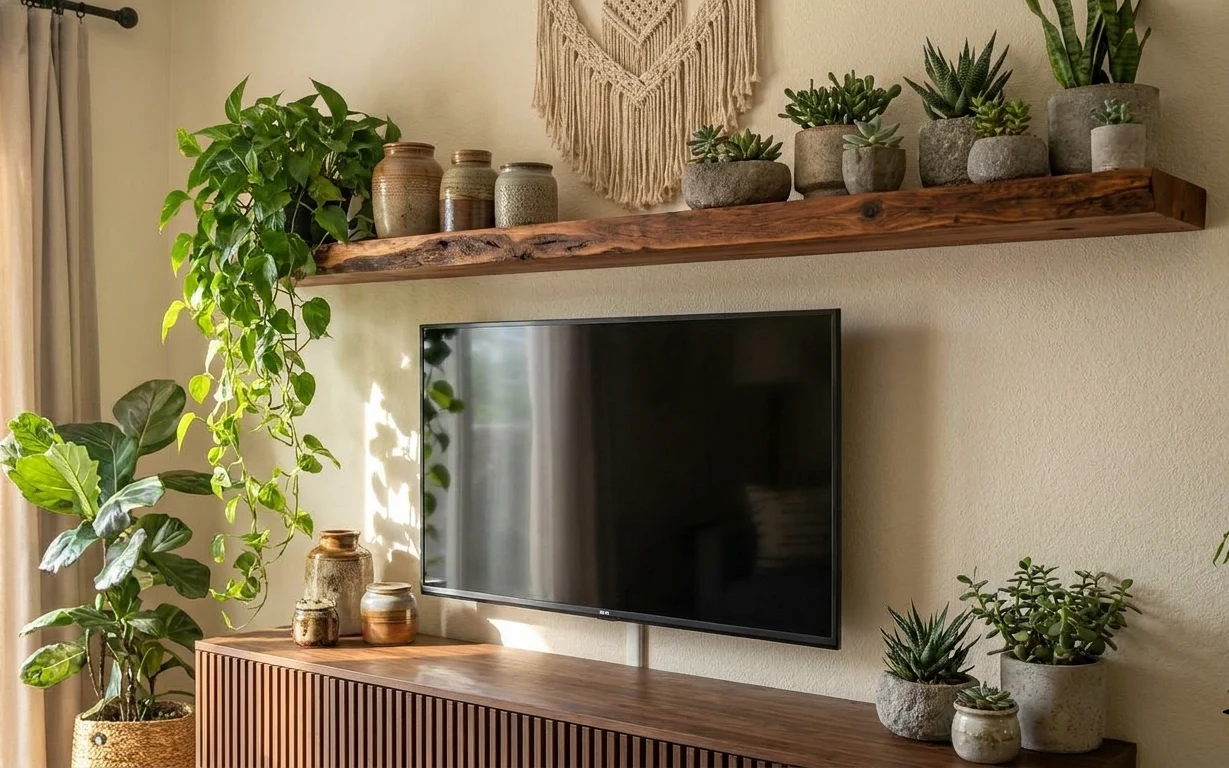
Under $500: move-ready TV plant wall with warm earth tones
A TV plant wall refresh for shared housing: curtains, macramé, a wood media console look, and layered planters that pack up in boxes. This …