- Best for
- Weekend makeovers with renter-safe swaps
- Cost
- Under $700
- Difficulty
- Easy to moderate
- Time
- 2–4 hours total
Why this green-sofa living room is the renter-friendly nook of 2026
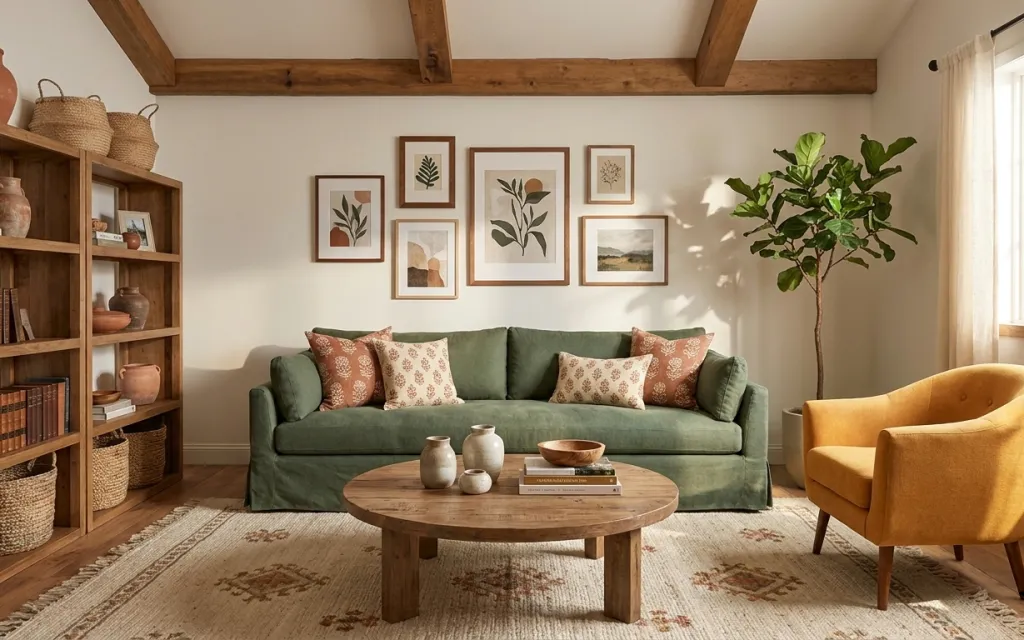
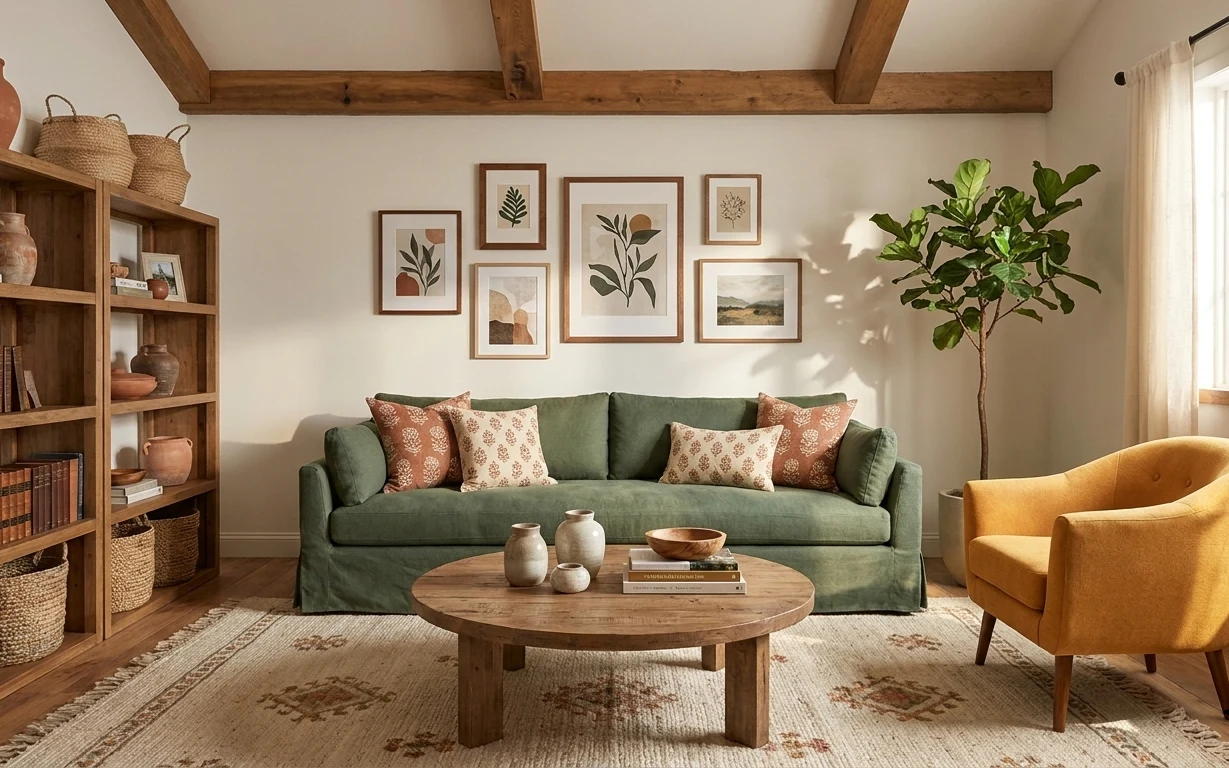
This setup is doing a lot with a few repeatable moves: the green sofa anchors the color story, the patterned area rug adds warmth underfoot, and the wood coffee table keeps everything grounded. The framed botanical prints bring in a graphic, gallery-wall feeling without looking cluttered. In a bright room like this (daylight from the window area), beige curtain panels soften the edges and make the whole palette feel intentional. The earthy ceramics on the table, plus the leafy tree, give you that lived-in rhythm without major renovation.
I used to overthink “matching” in my own place. I’d bring home three decorative objects and realize they were all the same shade of terracotta—fine alone, but too coordinated together. What finally clicked: pick one bold anchor (here, the green sofa), then repeat only the undertones (warm wood + cream). Everything else—prints, curtains, and ceramics—can be a variation, not a clone.
Layer 1 — Patterned area rug 8×10 ($150) Warm underfoot, hides the everyday
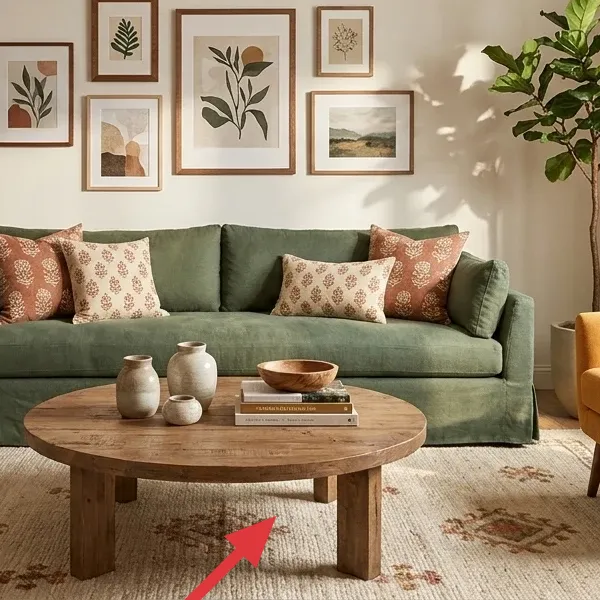
A patterned area rug in a warm neutral base is what makes the floor feel finished, especially with a green sofa in the same frame. Choose an 8×10 scale so the coffee table and front legs of seating feel visually tethered to one zone, not “floating.” The bonus here is practical: busy motifs disguise foot-traffic marks and dust streaks better than a plain weave. The trade-off is that patterns can read busy if you go too heavy on other prints, so keep your framed botanical gallery fairly clean and evenly spaced. For renters, a rug is also an easy pack-and-move win.
Pick a rug pattern that repeats your wall-art palette
If your framed botanicals have greens and warm tan lines, match those notes in the rug. It’s how the whole room looks planned without needing perfect color match.
Layer 2 — Green sofa ($250) The bold anchor color
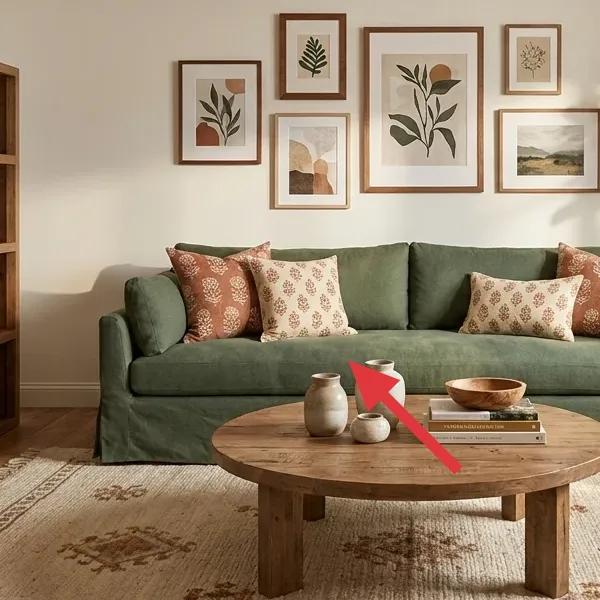
A green sofa is doing the “main character” work—so everything else can stay simpler. In the hero, the upholstery reads medium-depth green, which plays well with warm wood beams and the cream wall color. If you can, go secondhand to hit this renter-friendly price; the key is the seat shape and arm proportions so it still looks styled, not temporary. The obvious alternative is a neutral sofa, but you’d lose the color pull that makes the botanicals and ceramics feel cohesive. Trade-off: bold colors can show sun fading over time, so choose one that looks good in daylight and in lamplight.
Consider fabric texture, not just color
A sofa that’s woven or tightly textured usually looks calmer than a shiny upholstery, especially when the room already has patterns from the rug and prints.
Layer 3 — Round wooden coffee table ($60) Softer lines for an earthy room
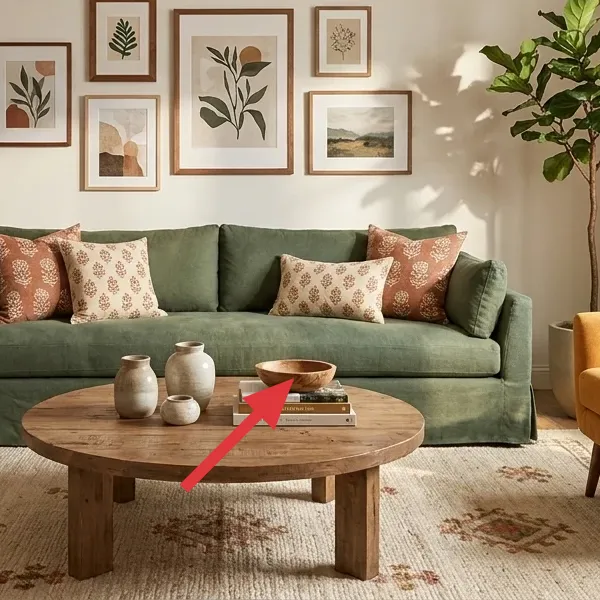
A round wooden coffee table keeps the center of the room feeling relaxed, which matters when you have a patterned rug and a framed botanical gallery on the wall. In this setup, the table’s warm wood tone echoes the shelves and ceiling beams, so it feels like part of the architecture instead of a random add-on. For staying within budget, look for a simple round top with minimal hardware—thrift and resale are usually where you’ll find the right silhouette cheaply. The obvious alternative is a square/rectangular table, but that adds corners at exactly the height your eyes move across. Trade-off: round tables can feel small for everyday clutter, so keep styling on a tray or two objects.
Style with fewer pieces on top
Because the hero has a busy rug and framed wall, stick to two to four ceramics plus a book stack—less clutter reads more intentional.
Layer 4 — Wooden bookshelf ($60) Storage that looks like decor
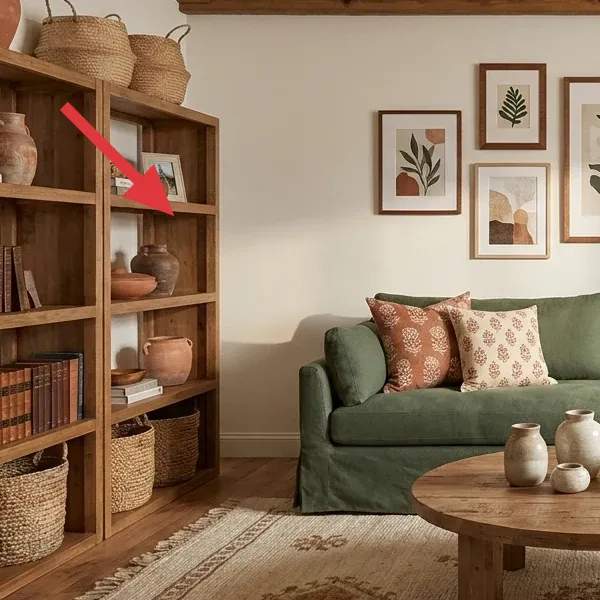
This wooden bookshelf is one of those “you notice it every day” pieces because it turns functional storage into visual rhythm. The hero’s shelf styling includes woven baskets, small ceramic items, and a book stack—so the room feels collected rather than empty. If you’re renting, a freestanding bookshelf is safer than trying to install anything new, and it packs away when your lease does. The trade-off is scale: too-small shelves won’t carry the same weight beside a green sofa, but too-large will block sightlines. Aim for a medium width that aligns roughly with the sofa height.
Don’t overload with similar-sized objects
When every ceramic and book has the same footprint, the shelf starts to look chaotic. Use one taller item, one medium stack, and a couple of small accents.
Layer 5 — Framed botanical print gallery set ($60) A renter-safe wall moment
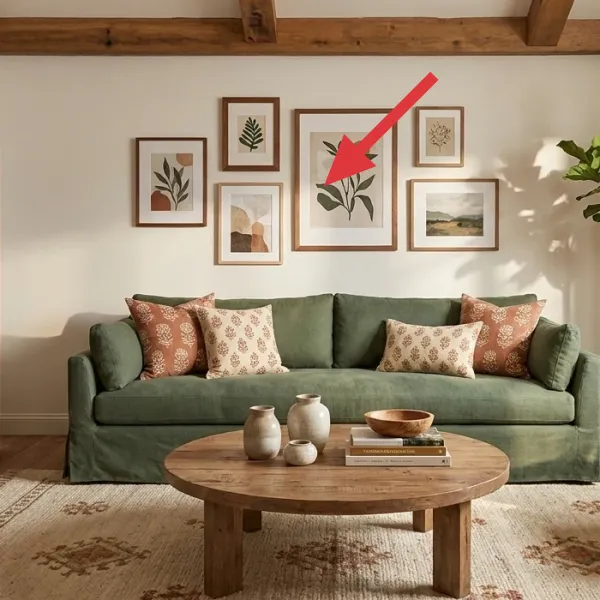
This framed botanical print gallery set is the reason the living room feels curated instead of “just furniture.” The prints in the hero vary—leaf shapes, muted landscapes, and small botanical silhouettes—while staying in the same warm paper-and-wood palette. For renters, the big win is that framed art on removable hanging methods lets you keep your deposit intact and still get that gallery look. The trade-off is time: getting spacing right matters, because too-tight frames start to feel busy. DIYing one or two prints (instead of buying a full matching set) keeps the budget realistic while still reading intentional.
Make it instead of buying it
DIY hand-painted abstract art on cardstock so you can match the botanical color story without paying for a full gallery set.
Materials
- Cardstock sheets (8.5×11 or larger) — 3 sheets — craft store — $5
- Acrylic paint set (earth greens + warm tan) — 1 set — craft store — $12
- Paintbrushes (one flat, one detail) — 2 brushes — craft store — $8
- Small picture frames (16×20 or chosen size) — 1 frame — thrift or discount store — $15
- Painter’s tape — 1 roll — craft store — $4
- Clear acrylic spray (optional for protection) — 1 can — craft store — $6
Steps
- Sketch 2–3 loose abstract leaf-like shapes on cardstock using light pencil marks.
- Mask off simple sections with painter’s tape for crisp edges.
- Paint the first layer in warm tan base tones, letting it dry completely between colors.
- Build in earth greens for veins or leaf clusters, keeping the palette limited.
- Remove tape to reveal clean lines, then add one darker accent shape for contrast.
- Let the art dry fully, then insert into a frame or add clear spray if you’re using it.
Total DIY cost: $50 — saves about $10 over buying.
Layer 6 — Curtain panels (pair) ($30) Softens the window wall
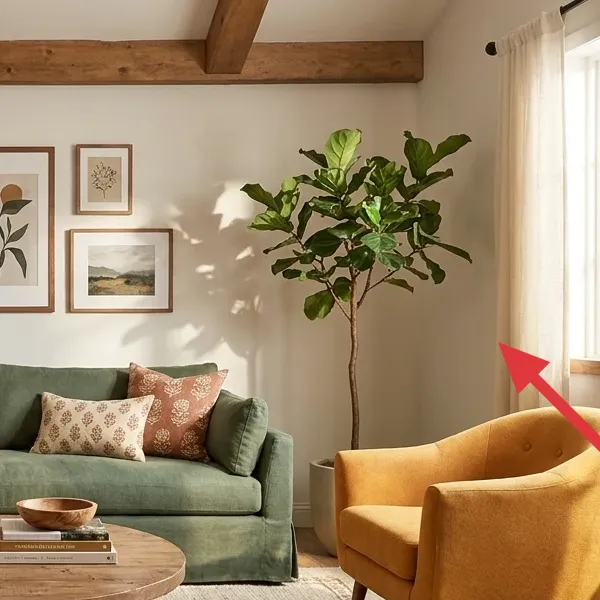
Curtain panels are the easiest way to make a rental living room feel less exposed and more layered, especially when your window area brings in bright daylight. In the hero, the curtains read light and neutral, which keeps the focus on the green sofa and the botanical prints. For this layer, choose a simple pair with a drapey fall and hang them using removable methods your landlord allows. The trade-off is that sheer or thin fabric won’t block all light—so if you need true privacy at night, go slightly heavier or plan for blinds you already have. Still, even without changing anything permanent, fabric does the work.
Match curtain color to the wall undertone
When curtains pull warm (like cream-beige), they make wood floors and ceramics look more cohesive.
Layer 7 — Indoor leafy tree ($30) Vertical lift without wall installs
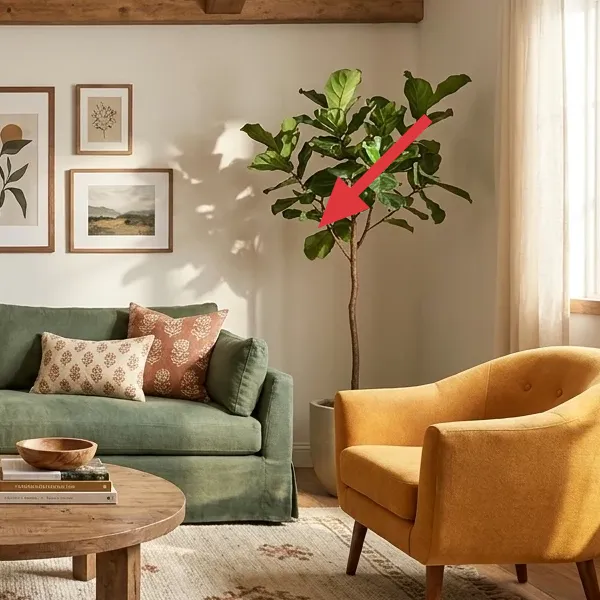
An indoor leafy tree adds height and softness in exactly the place your eyes want it—near the window and beside seating. The hero’s plant also helps bridge the greens in the sofa with the green tones in the botanical prints, which makes the whole palette feel linked instead of random. Look for a plant with multiple stems and full leaves so it reads “tree-like,” not sparse. The alternative—small plants on the coffee table—would sit at the same height as ceramics and feel flatter. Trade-off: plants need occasional rotation for even light, but they’re renter-friendly and packable. Choose a size you can move without hurting your back.
Rotate the pot a quarter turn weekly
Regular rotation keeps the leaves from leaning, so it stays sculptural and not lopsided.
The cost, layer by layer
| Layer | Item | Cost |
|---|---|---|
| 1 | Patterned area rug 8×10 | $150 |
| 2 | Green sofa | $250 |
| 3 | Round wooden coffee table | $60 |
| 4 | Wooden bookshelf | $60 |
| 5 | Framed botanical print gallery set | $60 |
| 6 | Curtain panels (pair) | $30 |
| 7 | Indoor leafy tree | $30 |
| Total | $640 | |
If you want a cheaper version, downshift the sofa and wall-art first: try a slipcovered green-look seat from resale and pick fewer framed botanical prints (a smaller set). You can also choose curtain panels in a lighter-weight fabric to keep the price closer to $20–$25.
What worked, what didn't (across the whole room)
Overall, the “anchor color + warm wood + botanical repeat” formula is what makes this living room feel intentional. The rug pattern and framed prints could have clashed, but the muted palette keeps it cohesive.
What worked
- The patterned area rug gives the green sofa a warm base and hides small everyday messes.
- The framed botanical prints add structure to the wall without requiring any permanent changes.
- The round wooden coffee table softens the room’s lines when the rug and art include pattern.
- The wooden bookshelf turns storage into styling, especially with woven baskets and ceramics.
- Light curtain panels make daylight feel softer and reduce visual harshness near the window.
- The indoor leafy tree connects the greens across sofa fabric and botanical prints.
What didn't
- If you add too many small decorative ceramics on the coffee table, the center starts to feel cluttered.
- A gallery set that’s spaced too tightly reads crowded, even when the individual prints are pretty.
- If the curtains are hung too low, the window wall looks chopped and the room feels shorter.
- A bookshelf packed with same-height items can lose that collected, curated rhythm.
What we'd skip if we did it again
Skip buying a full, matching gallery set at once. Start with fewer framed botanical prints and DIY one or two, because the spacing and repetition matter more than having every frame be the same exact print.
Skip a plain rug in the same tone as the sofa. In this color story, pattern is the warmth-maker—without it, the green can feel heavy and the room reads flatter than it does in the hero.
Skip curtain panels that don’t drape. If the fabric stands out or looks stiff, it fights the relaxed, earthy vibe of the rug and ceramics, and you’ll end up feeling like the room needs “finishing,” even after everything is set.
Frequently asked
How long does this kind of living room refresh take?
Most of the time is from sourcing the big pieces and taking measurements (rug size, curtain length, and art spacing). If you already have frames, plan on about 2–4 hours for staging, swapping, and styling. DIY framed abstract art can add another 1–2 hours depending on drying time and whether you use tape for clean edges. If you’re waiting on shipping, your timeline stretches—but the “hands-on” part stays manageable.
I rent—what makes this look renter-safe?
You’re only using removable upgrades: a patterned area rug, freestanding furniture, curtain panels, and framed wall art. For the gallery, choose hanging hardware designed for renters (like Command-style methods) so you’re not drilling into walls. Stick to non-permanent styling for the coffee table—trays, ceramics, and book stacks—so nothing relies on landlord fixtures. Pack-and-move is also easier because rugs and textiles come with you.
What if my room is smaller than this one?
Go smaller on the rug size but not on the “anchor color” choice. If you can only fit a compact sofa, keep the rug large enough that at least the front legs sit on it. For wall art, reduce the gallery to fewer frames so it doesn’t overwhelm the wall. Choose curtain panels with a lighter fabric and hang them higher to make the window feel taller, even in a walk-up.
What if my room is larger—how do I scale the same vibe?
In a larger living room, keep the sofa as your anchor and size up the rug so the coffee table feels centered within a single zone. Consider a bigger framed botanical arrangement (more frames or a larger print size) to avoid looking too “small” on the wall. A taller indoor leafy tree also helps fill vertical space near the window and keeps the green theme from feeling scattered.
Where should I shop differently to keep the budget realistic?
Treat the sofa and coffee table as your resale targets, then buy textiles new if you want quick color accuracy. For framed botanicals, look for thrifted frames or clearance frames and DIY a couple prints to bridge the gap between bargain and cohesive. For curtains, check big-box retailers for neutral pairs in versatile lengths. If you’re buying an indoor leafy tree, choose the healthiest-looking plant over the biggest pot.
Biggest mistake people make in this room type?
Overmatching. When everything is the exact same shade of green or the exact same tan, the room can feel flat instead of collected. Keep one hero element bold (the green sofa), then repeat undertones—warm wood and cream—across ceramics, curtain fabric, and the botanical prints. Another common slip is under-sizing the rug, which makes the seating zone feel disconnected.
More in Living Room
Under $700: How to get a green-sofa living room look
A green-sofa living room refresh that reads warm, earthy, and collected—even if you’re moving in and out. With a $700-style budget, you’ll …
Under $1,000: a weekend living room gallery refresh with plants
A living room gallery wall, warm lamp light, and layered neutrals—refreshed with a DIY mini-art set. This weekend-friendly plan is designed…
Under $400: the earthy sofa seating corner refresh for shared renters
A move-friendly refresh for a living-room sofa seating corner with an earthy rug, knit throw, and warm terracotta accents. This is an under…