- Best for
- palette + layout
- Cost
- under $800
- Difficulty
- Confident DIY
- Time
- One weekend
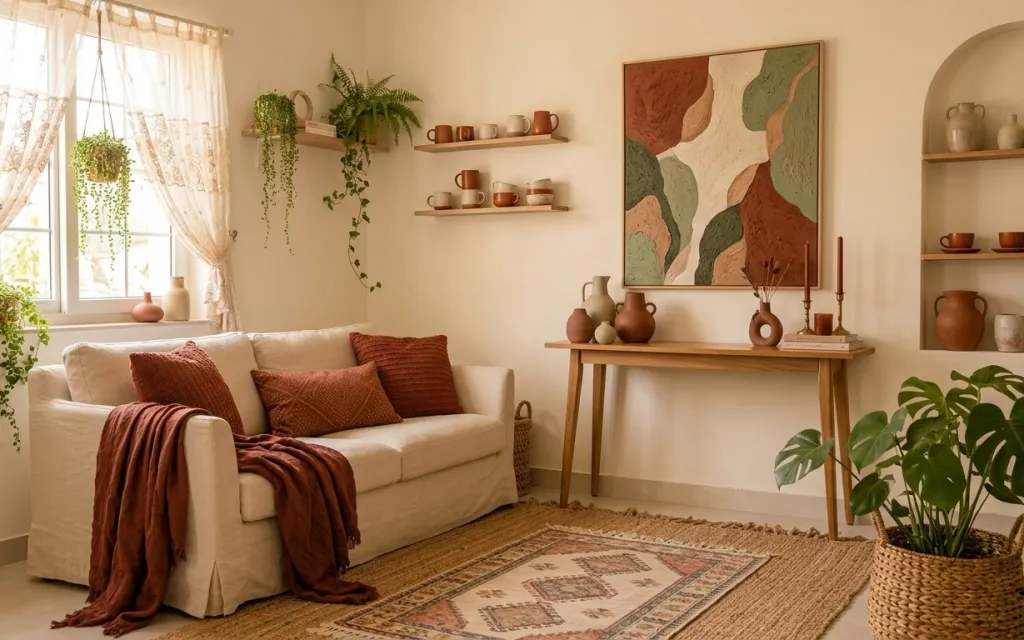
Why this terracotta-and-sage sofa corner is the sofa corner of 2026
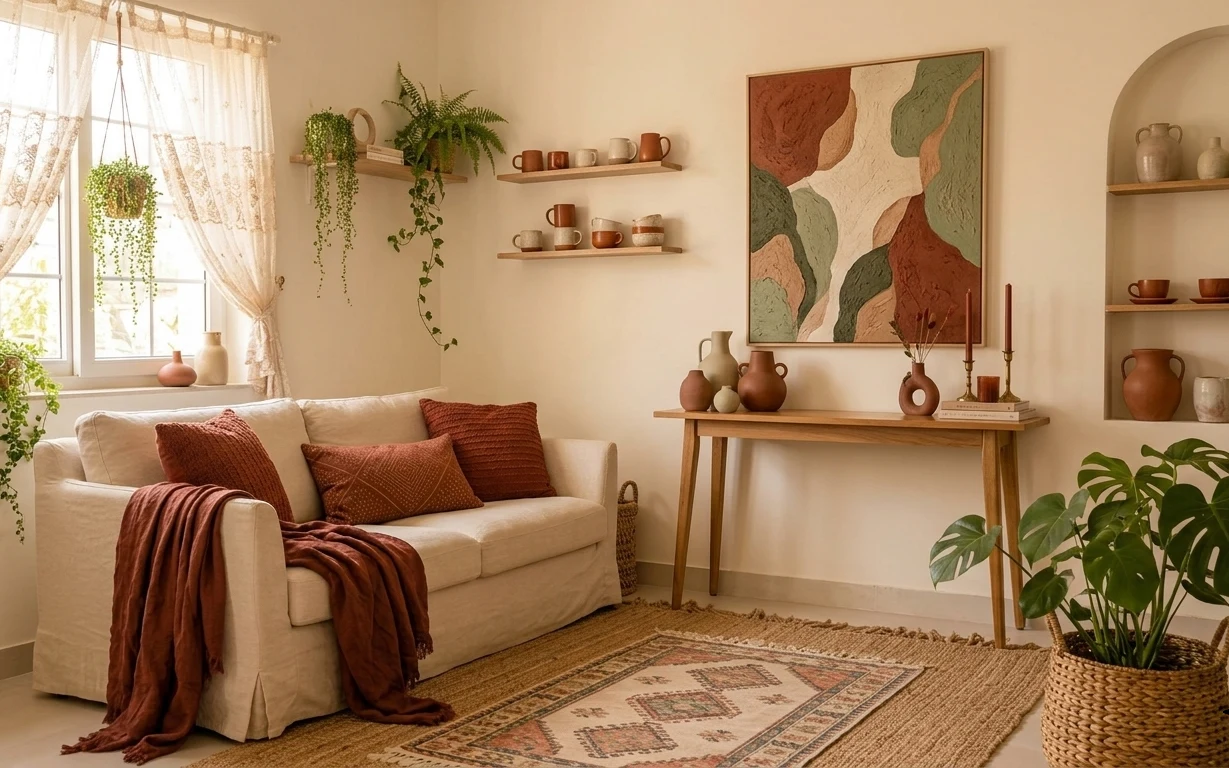
In this bright living room, the cream upholstery gives you a calm base while terracotta textiles and sage greenery add warmth without making the space feel heavy. The layered look comes from three “structure” pieces: a patterned area rug under the coffee-zone scale, sheer lace-pattern curtains that keep daylight soft, and framed abstract art that sets the color story. Then the floating shelves bring rhythm—smaller ceramics up high, larger shapes on the console, and trailing vines to slow everything down. This is achievable for homeowners because you can choose the higher-impact pieces first, not the reversible ones.
I used to treat wall art like a “later” decision, but every time I’ve waited, the room always felt like it was missing a spine. Here, the framed abstract print does that job immediately: it tells your eye where to land, and it’s easier to style shelves once the palette is locked. I also learned the hard way that a throw blanket shouldn’t match the rug perfectly—it should echo the warm tones instead. That tiny trade-off is what keeps the whole sofa corner from looking too matchy.
Layer 1 — Area rug ($200) pattern and texture under the sofa
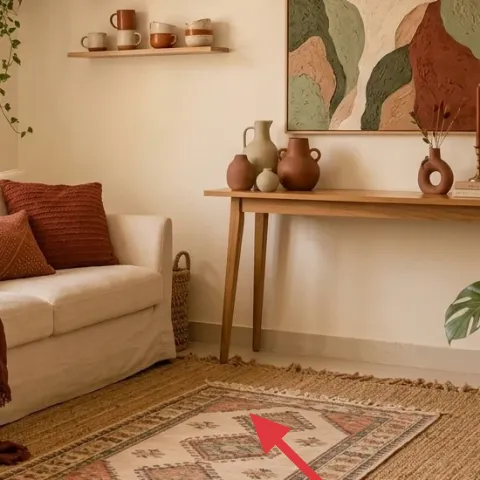
This patterned area rug anchors the entire sofa corner with a warm, woven look that reads like natural fiber from a distance. Its earthy motif works with terracotta and green decor without needing a second “busy” pattern elsewhere, which is the opposite of what happens when people buy a plain rug and then try to rescue the room with everything else. I’d still choose this over a solid rug, because the small-scale design hides everyday scuffs and blends with the ceramics’ shapes. The trade-off is that vacuuming takes a little attention, but it’s worth it for how pulled-together the floor feels.
Vacuum in both directions
Woven rugs can hold onto grit—quick passes lengthwise and crosswise keep the texture looking even.
Layer 2 — Sheer lace-pattern curtain panels ($80) lets daylight do the styling
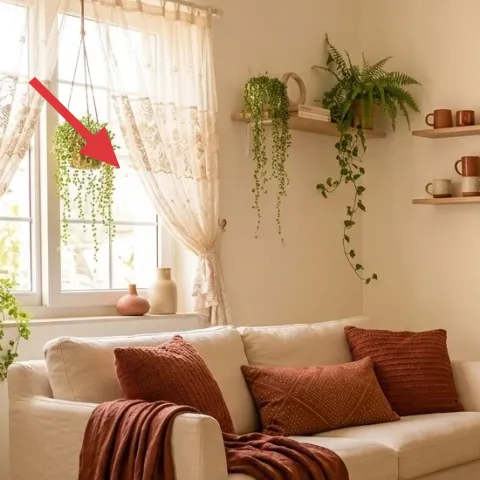
Those sheer lace-pattern curtains keep the room bright while adding a soft, patterned frame around the windows. This matters in an earthy palette, because dark drapes can make terracotta feel louder than it needs to be. The sheer fabric also gives your trailing plant vines somewhere to “float,” so the wall-to-window transition feels intentional. The obvious alternative is full blackout or thicker panels, but they would reduce the airy feel you see here. The trade-off is privacy—you’ll rely more on how you place furniture and on the time of day, not a heavier curtain.
Layering counts even when it’s light
Sheers still work as a layer; they just happen to be the lightest one in the room.
Layer 3 — Terracotta throw blanket ($60) adds warmth where your eye rests
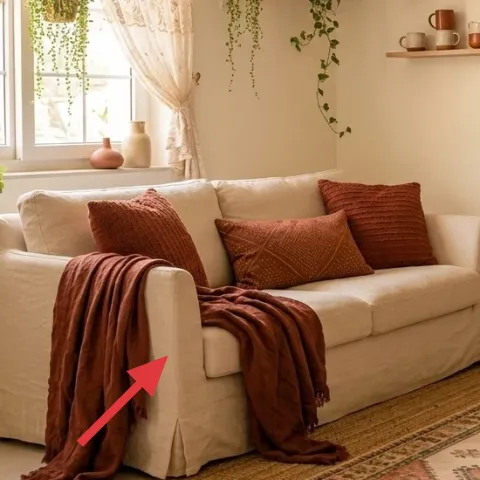
This terracotta throw blanket is draped over the sofa arm area, where it naturally catches attention without forcing it. The color echo matters: terracotta is already in the ceramics and ceramics’ warm glaze tones, so repeating it in the textile makes the whole corner feel like one setup. I’d pick a throw like this over adding another framed print, because textiles soften the visual edges of a slipcovered sofa and make the room feel lived-in on day one. The trade-off is that throws shift—some weeks you’ll re-fold it so the fall stays intentional.
Fold, don’t blanket it
A casual fold across one arm reads styled; full coverage can look like a blanket fort.
Layer 4 — Framed abstract wall art ($80) tie the palette to the shelves
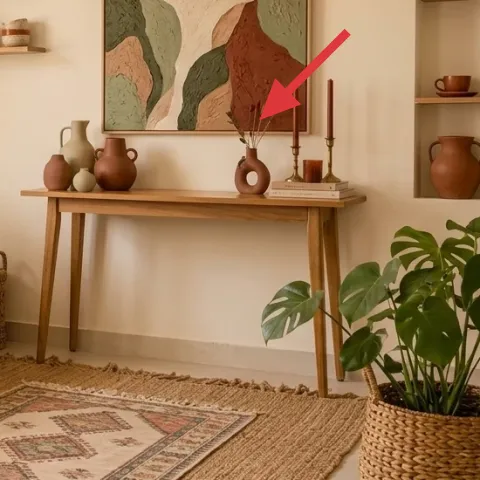
The framed abstract wall art sits above the console table and acts like a color filter for everything below it. You can see warm rust and soft greens pulling from the ceramics on the shelves, which is why the room looks cohesive even though there are multiple objects and heights. Buying art is quick, but homeowners often get the best satisfaction by swapping in something tailored: a piece that matches the terracotta and sage ratio you actually want. Here’s the DIY version that keeps the “instant anchor” feeling while costing less than buying a new print.
Make it instead of buying it
Paint a simple abstract on canvas board and swap it into the existing frame so the colors match the terracotta ceramics and sage greenery.
Materials
- Canvas board (8×10) — 1 — craft store — $18
- White gesso — 1 small — craft store — $12
- Acrylic paint set (terracotta + sage green) — 1 set — craft store — $15
- Assorted craft brushes — set — craft store — $10
- Matte varnish or craft sealant — 1 — craft store — $12
Steps
- Sand the canvas board lightly and wipe dust with a dry cloth.
- Brush on a thin coat of gesso; let it dry completely.
- Sketch a loose abstract layout with pencil (big shapes first, details last).
- Block in the largest color areas with terracotta, then let dry.
- Layer sage-green shapes on top; add lighter cream passes where you want breathing room.
- Refine edges with a smaller brush, then let the paint dry fully.
- Seal with matte varnish in thin coats; let it dry between coats.
- Once fully dry, remove the existing art backing and swap in your painted board.
Total DIY cost: $67 — saves about $13 over buying.
Keep the palette ratio simple
If the greens overpower the terracotta, the shelves won’t “agree” and the wall starts to look random.
Layer 5 — Floating wall shelves ($180) turn wall space into a height gradient
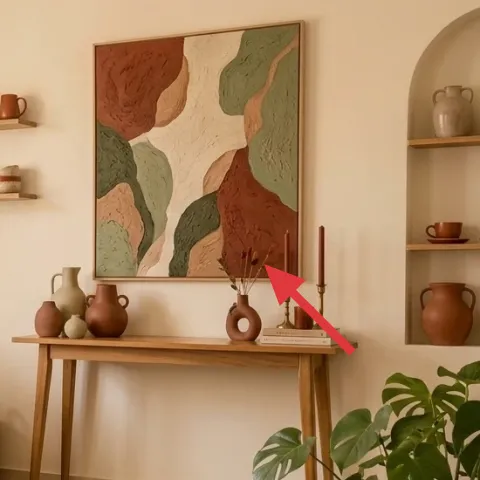
Floating wall shelves bring vertical organization: taller ceramics and plants can live higher, while smaller pottery stays at eye level. That gradient is what makes the sofa corner feel collected rather than crowded. This is a better move than adding a single tall cabinet, because open shelving keeps the room visually breathable—especially with sheer curtains and a warm rug already taking up texture. The trade-off is that open shelves show dust, so styling has to be slightly more curated day to day. Still, the payoff is big: the shelves give you a place for that copper-candle moment on the console and keep everything anchored to the framed art.
Group by height, not by color
Try one tall item, two medium items, and several small pieces to create rhythm.
Layer 6 — Indoor plant with broad leaves ($80) brings the sage note to life
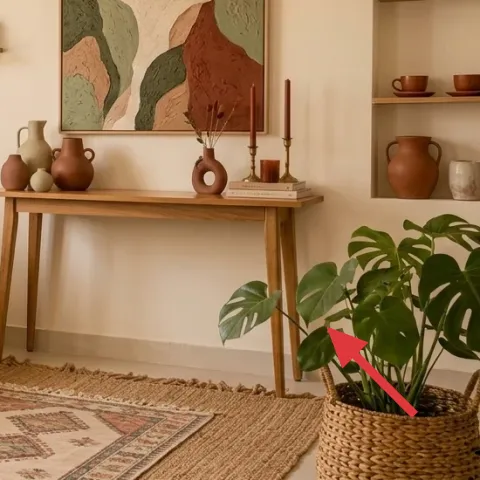
The indoor plant with broad leaves on the right side gives you a living green “shape” that matches the sage tones in the art without needing more decor objects. Plants also soften the geometry of wall shelves and the console legs; the leaves create movement where everything else is mostly straight lines. I’d choose an actual plant over a vase of flowers, because it keeps contributing texture month after month instead of fading out. The trade-off is care: broad-leaf plants want light and an occasional dusting so the leaves keep their crisp look.
Dust leaves before judging the color
Wipe leaves with a damp cloth—dust makes greens look dull and muddy.
Layer 7 — Decorative ceramic vases ($30) add warm, hand-made-looking texture
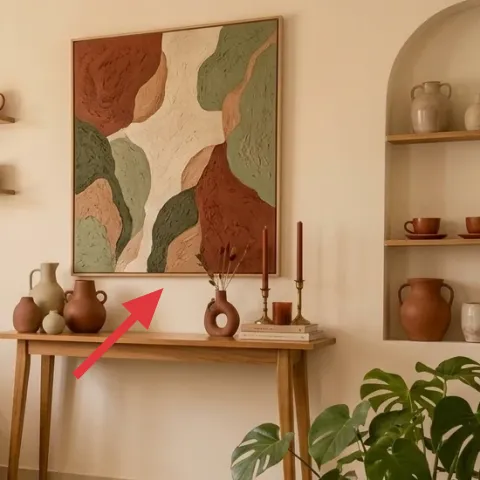
Those decorative ceramic vases and pottery cups on the console and shelves read as handmade through their matte glaze and rounded silhouettes. That’s important because the room has a lot of “soft” textures already—the slipcovered sofa, the woven rug, the sheer curtains—so ceramics provide a slightly firmer texture contrast without introducing anything harsh. The alternative is to buy a single large vase, but the smaller set lets you repeat terracotta across heights and keep the palette consistent near the framed art. The trade-off is that ceramics are easy to over-style; aim for three pieces at a time, then stop.
Leave negative space on purpose
Small gaps between vessels make the terracotta and cream tones feel intentional instead of cluttered.
The cost, layer by layer
| Layer | Item | Cost |
|---|---|---|
| 1 | Area rug (patterned 5×7 style) | $200 |
| 2 | Sheer lace-pattern curtain panel pair | $80 |
| 3 | Terracotta throw blanket | $60 |
| 4 | Framed abstract wall art | $80 |
| 5 | Floating wall shelves | $180 |
| 6 | Indoor plant with broad leaves | $80 |
| 7 | Decorative ceramic vases | $30 |
| Total | $710 | |
If you want a cheaper variant, start with the rug and curtains and spend less on the wall shelves—choose one simple shelf line instead of multiple heights. Then pick one larger ceramic piece on the console rather than a few smaller items.
What worked, what didn't (across the whole room)
The best overall outcome came from tying the terracotta-and-sage palette together using the framed abstract art and then repeating those tones in textiles and ceramics. Layering heights (curtains, shelves, console, plant) made the corner feel collected without looking busy. The one place I’d be more cautious is how many small objects land on the shelves—too many diminishes the calming effect of the cream sofa.
What worked
- The patterned area rug grounds the sofa corner and hides daily wear better than a plain rug.
- Sheer lace-pattern curtains soften daylight and make the trailing plant look intentional.
- Terracotta throw placement gives warm color exactly where your eye lands when you sit down.
- Framed abstract wall art unifies the palette so shelves and console styling don’t feel random.
- Floating shelves create a height gradient that adds structure without heavy furniture.
- Broad-leaf greenery adds living texture that matches sage tones in the art.
What didn't
- Too many small shelf pieces can make the wall feel cluttered and compete with the art.
- If the terracotta throw is folded the same way every day, it can look slightly “crumby.”
- Open shelving means dust buildup is more noticeable than with closed cabinetry.
- Choosing a rug with a mismatched undertone can pull terracotta toward orange or pink.
What we'd skip if we did it again
Skip buying a second framed print right away. Once the abstract wall art is in place, it’s the palette reference point that makes the shelves and ceramics feel coordinated.
Skip heavy blackout curtains in a room like this. Sheer lace-pattern panels keep the brightness and make terracotta feel warm rather than saturated.
Skip over-styling floating shelves. Three clusters at different heights are easier to maintain, and they preserve the airy contrast against the cream sofa.
Frequently asked
How long does this kind of living room sofa corner refresh usually take?
The timeline depends on the DIY layer. For a straight buy-first refresh, most people can do rug placement, curtain hanging, and shelf styling in about 4–6 hours. Add an art DIY swap and it’s usually another 2–4 hours (plus drying time between coats). The styling itself is where you may slow down—expect to spend 30–60 minutes stepping back and editing until the shelf heights feel balanced.
Is this renter-friendly, or will homeowners need different steps?
This plan is easiest for homeowners who can choose a rug and curtains freely, and can commit to shelf placement. Renters can still copy the visual priorities: rug first, then sheer curtains, then a framed print with a palette-matching print replacement. For shelves specifically, renters should use wall-safe mounting methods they already feel comfortable with, and prioritize freestanding styling if drilling is off-limits.
What if my room is smaller or the sofa corner feels cramped?
Go smaller on the rug footprint only if you must, but don’t change the strategy: keep the rug doing the anchoring job under the front legs of the sofa area. Keep curtains light and high on the window so they elongate the view. On shelves, reduce the number of ceramic pieces—one tall shape, two medium items, and a couple of small accents is enough.
What if my room has different wall colors than cream?
The palette still works if you adjust undertones. Cream walls are ideal with terracotta and sage, but if your walls skew cooler or darker, lean on warm ceramics and slightly warmer terracotta in the textiles. If you’re unsure, start by placing the framed abstract art (or DIY matching print) first—once the art sits, the shelf and throw colors become much easier to pick.
Where should I shop to recreate this earthy boho look on a budget?
Start with rugs and curtains from big-box retailers for predictable sizing, then search for ceramic vases and pottery cups at home decor sections and thrift stores. For wall art, the easiest budget path is to DIY a matching abstract and swap it into a frame you already own. Floating shelves are often easiest to buy as a set for matching wood tone and consistent spacing.
Biggest mistake people make when styling a sofa corner like this?
Overstuffing the shelves with too many small pieces. The visual trick here is height, not quantity: a tall element up top, medium shapes in the middle, and negative space so the framed abstract has room to “lead.” When shelves get crowded, the room stops looking collected and starts looking like an inventory list of objects.
More in Living Room
Under $800: earthy living room sofa corner refresh with 7 layers
A bright, earthy living room sofa corner refresh you can finish in a weekend. This $800 plan leans into cream upholstery, terracotta accent…
Under $500: warm neutral living room renter refresh
A warm neutral living room refresh that reads expensive without renovations: start with a soft area rug, add a throw-and-pillow stack, swap…
Under $600: plant-filled sunlit living room refresh with 7 layers
A sunlit living room refresh for shared spaces, built around terracotta-and-olive warmth. This move-friendly plan uses 7 swap-in layers (te…