- Square footage
- ~50–90 sq ft corner
- Cost
- Under $800
- Difficulty
- Weekend-friendly
- Renter-safe
- Mostly (use removable hanging options)
Why warm earthy-neutrals is the sunlit window office nook of 2026
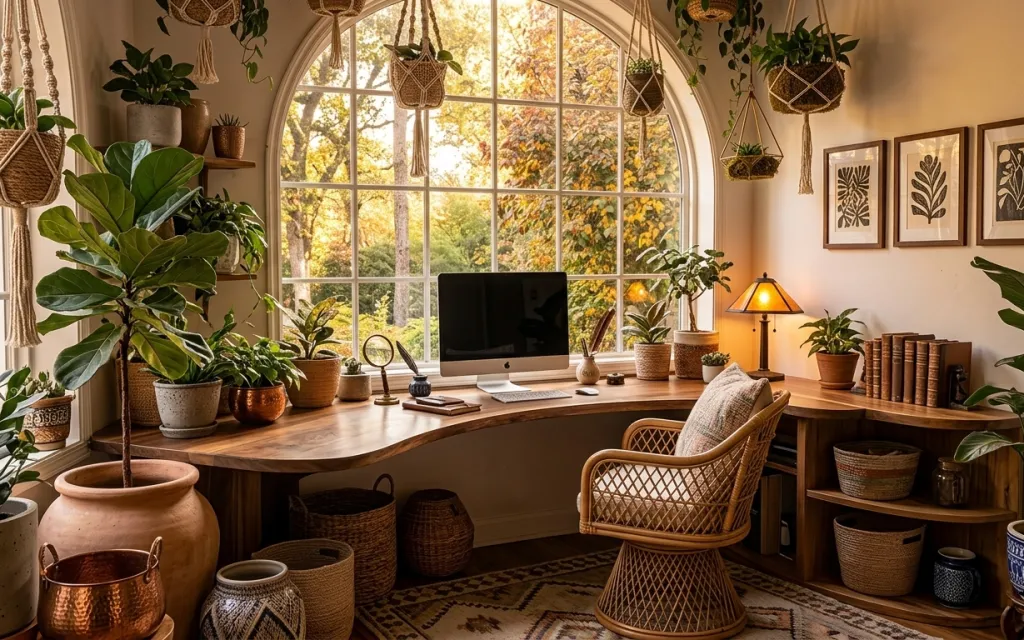
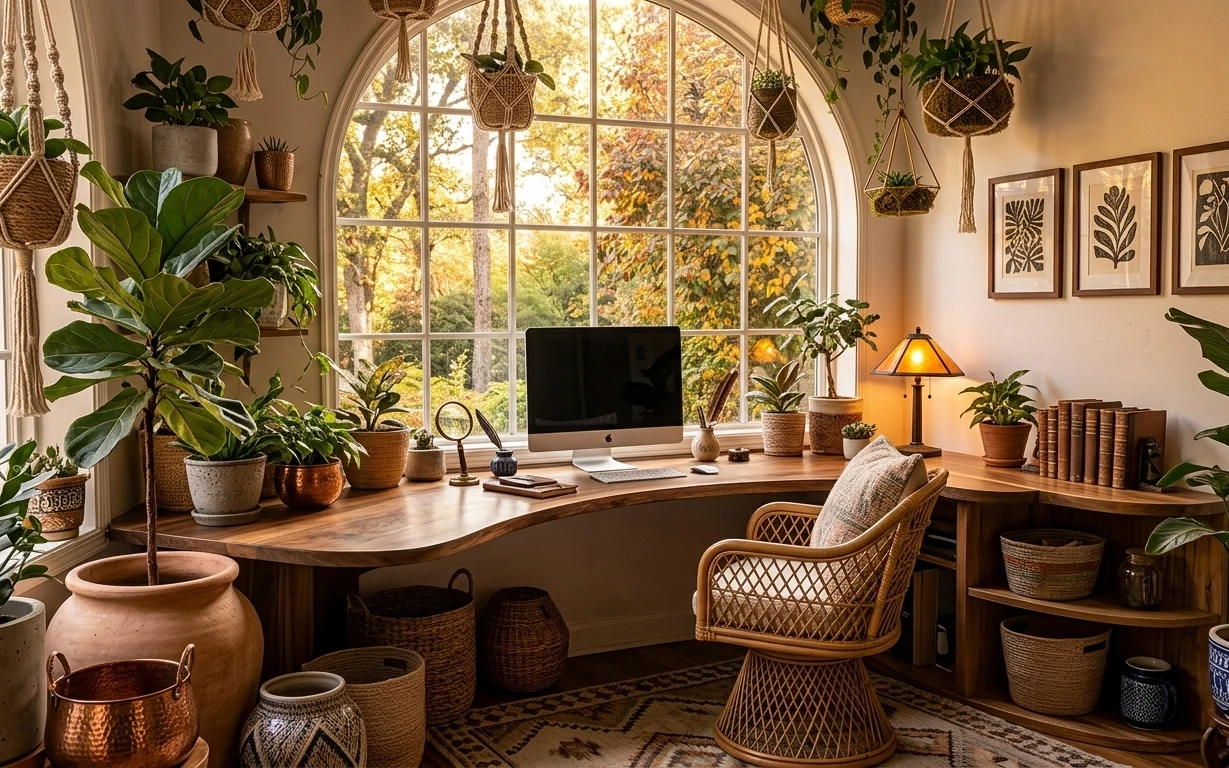
The first thing I notice here is how the window turns your desk into daylight theater: you get that soft glow on the light wood floor and the bay window panes. The texture mix matters, too—rattan chair curves, a patterned area rug underfoot, and terracotta planters with a handmade feel keep it from reading too “matchy.” Even the amber-shade lamp stays warm after the sun drops. For US homeowners working within a weekend budget, this look is achievable because the biggest changes come from pick-one-or-buy-one upgrades: rug + lighting + one wall moment.
I used to chase “more plants” as my shortcut, and it often made corners feel busy instead of collected. What changed my mind: treating plants like styling objects (grouping pots by height, keeping the desk surface uncluttered, and repeating terracotta tones) so everything still has breathing room. In a small nook, that balance is the whole trick.
Layer 1 — Patterned area rug ($160) grounds the desk-and-chair zone
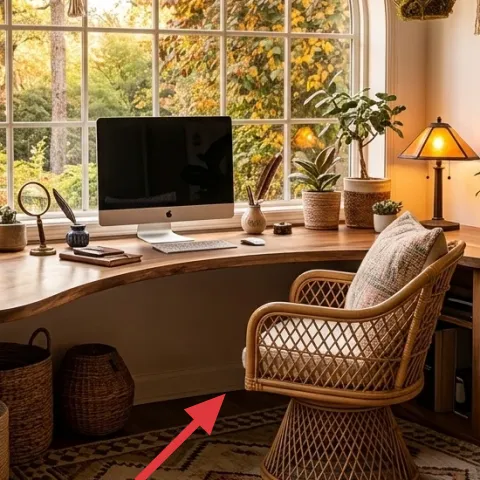
A patterned area rug is the fastest way to make this sunlit window office nook feel designed instead of accidental. In the photo, the rug’s earthy pattern visually anchors the chair and softens the light wood floor, which otherwise reflects too much daylight. The trade-off I’m okay with is that you’ll need a quick vacuum schedule, because textured patterns show lint more than flat weaves. When shopping, I’d aim for a 5×7 footprint that reaches under the chair front and part of the desk’s “work line,” so your feet always land in the same place.
Pick a rug pattern that matches your plant colors
Terracotta, walnut brown, and warm cream show up in the plants and desk—let the rug repeat that palette so the nook looks cohesive.
Layer 2 — Table lamp with amber shade ($60) adds warm light after sunset
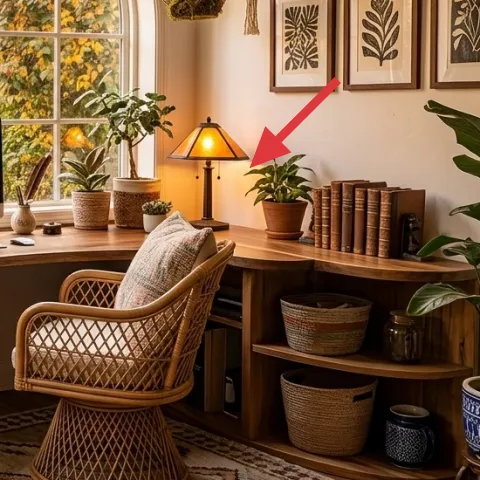
The table lamp with an amber shade is doing more than decoration here—it’s creating a second lighting temperature so the nook stays comfortable at night. With the window doing the bright work during the day, the lamp handles the evening by adding a warmer, softer pool of light over the desk surface. The trade-off is you’ll want to keep the lamp base area tidy, because anything on top becomes part of the light. If you’re tempted to buy a crisp white shade, don’t—this setting needs amber warmth to balance all the green.
Use the lamp to “frame” the desk
Place the lamp so it lights the writing area, not the shelves—your eyes will read the nook as more organized.
Layer 3 — Framed botanical prints on the right wall ($180) brings repeatable calm
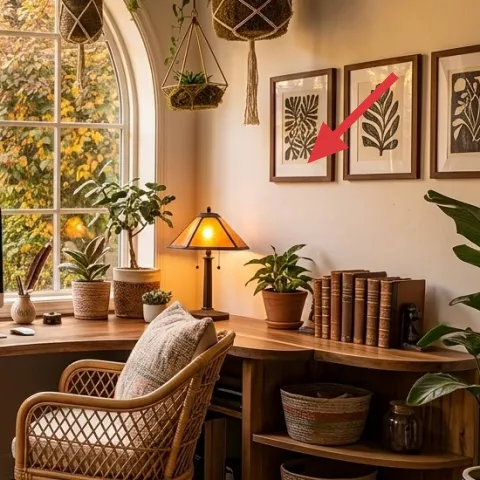
Those framed botanical prints are a tidy way to bring nature into the room without adding visual noise. The prints mirror the plant theme, but the black-and-cream lines keep it graphic, which is important in a small space packed with textures. The trade-off I accepted: you have to commit to exact spacing and a consistent frame size, because mismatched frames would fight the shelves. If you want the same effect, choose three to five prints with similar tones and hang them so the center print sits at about eye level for seated work.
Match frame color to your desk tone
Using wood-toned or dark frames keeps the prints from floating against the warm cream wall.
Layer 4 — Wood desk in front of bay window ($180) makes the nook feel like a real workspace
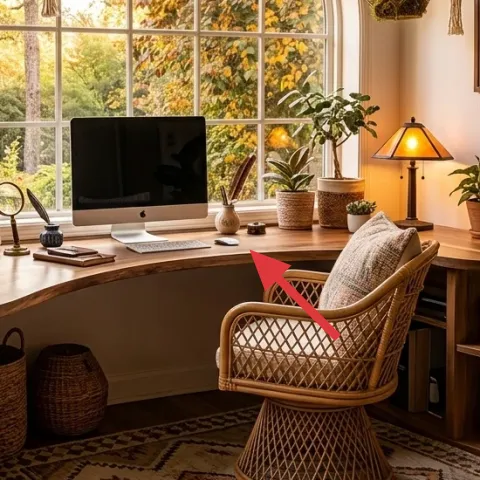
A substantial wood desk is the “scene setter” for the whole nook: it gives you a work surface that feels intentional even when plants crowd the edges. In the photo, the desk’s warm finish reflects daylight in a controlled way, so the window doesn’t overpower the room. The trade-off is size—if you go too small, the lamp, books, and laptop will spill onto the rug and make the corner feel cramped. For a weekend refresh, measure the window sill-to-chair spacing first, then pick a desk depth that leaves room for the chair to slide in without snagging plants.
Avoid desks with glossy finishes
Glossier tops catch the window glare and make it harder to see your screen.
Layer 5 — Rattan swivel chair ($120) adds comfort and boho rhythm
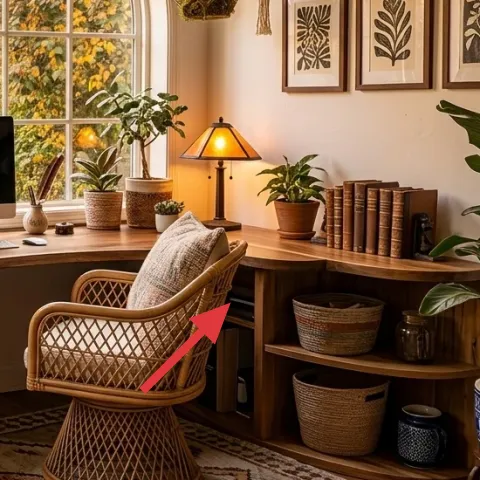
The rattan swivel chair is what makes the nook feel relaxed instead of strictly “office.” Its woven texture repeats the natural materials already in the room, and the curved silhouette softens the straight lines of the bay window and shelves. The trade-off is cleaning—rattan catches dust in the weave—so plan on a gentle brush attachment when you vacuum. This chair also works visually because it sits on the patterned rug, helping the nook read as a zone, not just a desk against a wall. If you can, choose one with a supportive seat cushion in a neutral pattern.
Let the chair echo the rug colors
Keeping the cushion and chair warmth aligned with terracotta and cream makes the whole corner feel pulled together.
Layer 6 — Hanging macramé plant hanger ($40) lifts greenery upward
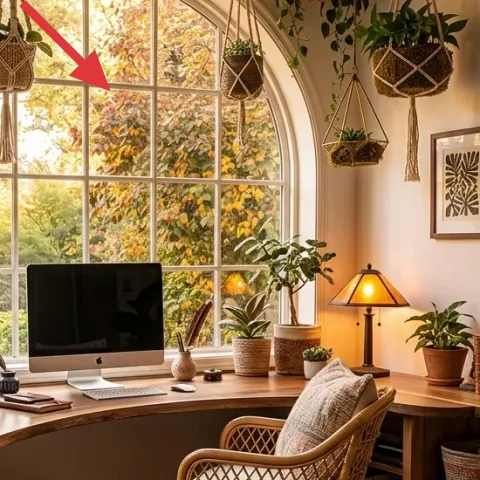
Hanging macramé plant hangers solve the small-space problem: you get greenery without consuming desk or shelf inches. In this nook, the hanging planter adds height above the bay window line, which makes the corner feel taller and more layered. The trade-off is that you’ll need to keep plant care reachable—if a hanger is too high or tangled, it becomes annoying fast. Stick with a simple macramé style and consistent planter shape so it looks intentional, not chaotic. For renters, you can usually rig these with removable ceiling hardware, but since you’re a homeowner, you can also use the most secure option you’re comfortable with.
Stagger heights so leaves overlap
Mix one tall plant with a mid-height one so their leaves create a soft “ceiling” of green.
Layer 7 — Large terracotta planter pot ($40) repeats the warm clay palette
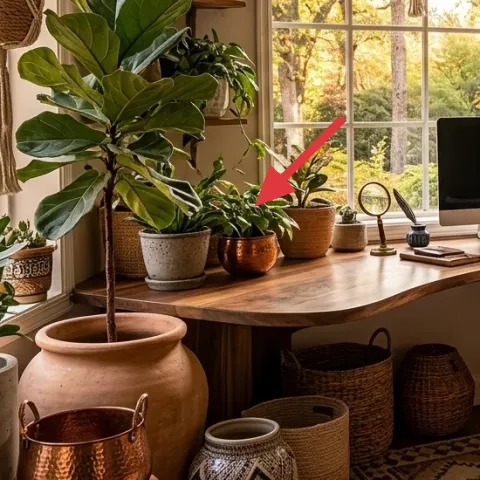
Terracotta planters are the color glue in this whole scene: they pick up the warm tones from the desk and lamp and make the greenery look richer. Instead of buying all-new pots, the better weekend move is to refresh the ones you already own so they look coordinated. If you choose one DIY approach, make it this—small changes here read instantly because pots are everywhere in the frame. The trade-off is that paint can look too flat if you rush, so prep matters: clean the pots thoroughly and use a primer that helps paint grip porous clay.
Make it instead of buying it
Paint a set of terracotta planters in warm neutral tones so they match the desk-and-lamp palette without replacing every pot.
Materials
- Primer for porous surfaces — 1 can — Home improvement store — $7
- Acrylic paint (warm neutral color) — 1 small bottle — Craft store — $12
- Glossy clear sealer (for dry surfaces) — 1 can — Home improvement store — $6
- Foam brush set — 1 pack — Craft store — $4
- Painter’s tape + drop cloth — 1 kit — Hardware store — $3
Steps
- Wash and dry the terracotta completely so the paint can bond.
- Mask any rim areas you want to stay natural with painter’s tape.
- Apply primer in thin coats.
- Let the primer dry fully per the can instructions.
- Paint the first coat with a foam brush for even coverage.
- Let the paint dry fully, then add a second coat if needed.
- Let the final coat cure so the finish feels firm.
- Apply clear sealer as a top coat if the planters will sit on shelves.
- Let the sealer dry and set before styling back on shelves.
Total DIY cost: $32 — saves about $8 over buying.
The cost, layer by layer
| Layer | Item | Cost |
|---|---|---|
| 1 | Patterned area rug (5×7) | $160 |
| 2 | Amber-shade table lamp | $60 |
| 3 | Framed botanical prints set (3 frames) | $180 |
| 4 | Wood desk | $180 |
| 5 | Rattan swivel chair | $120 |
| 6 | Hanging macramé plant hanger | $40 |
| 7 | Large terracotta planter pot (DIY equivalent) | $40 |
| Total | $780 | |
If you want a cheaper version, start with the rug and lamp first, then scale the wall art down to two framed prints. Swap the macramé hanger for a single tabletop plant and choose smaller planter pots, and the overall look still stays warm and collected.
What worked, what didn't (across the whole room)
This nook feels cohesive because the warm palette repeats in three places: the desk finish, the terracotta planters, and the amber lamp glow. Layering texture—woven chair, patterned rug, and macramé hangers—keeps it from feeling flat in bright bay-window light.
What worked
- The patterned area rug defines a small zone and stops desk clutter from looking like spillover.
- The amber-shade table lamp keeps evening lighting warm enough for long reading sessions.
- Framed botanical prints add “controlled nature,” balancing the organic shapes of live plants.
- Terracotta planters repeat the color theme and make the window light feel softer.
- Hanging macramé plant hangers add height so the nook feels taller without adding floor bulk.
- The rattan swivel chair introduces texture that matches both rug pattern and shelving tones.
What didn't
- When the desk surface gets too crowded, the bay window brightness makes everything look busy.
- If the chair cushion pattern is too bold, it competes with the rug’s print.
- Too many different planter shapes at once makes the terracotta theme feel random.
- Hanging planters placed at the same height can block the window line instead of framing it.
What we'd skip if we did it again
Skip buying extra décor first—plants and picture frames already do the “storytelling” work in this nook. Instead, prioritize one anchor layer (the rug) and one lighting layer (the amber-shade lamp) so the space reads correctly even before you style. When those basics are in place, everything else becomes easier to place.
Skip choosing wall art that’s all one color (just green, or just beige). The botanical prints work because they’re graphic and repeatable, which balances live leaves. If you find prints with heavy gradients, they’ll fight the rug pattern and shelves, especially in a bright bay window.
Skip painting only one planter and leaving the rest untouched. The difference is noticeable, but it looks accidental rather than curated. Group three to five planters in the same warm neutral direction so the color repetition feels like a plan.
Frequently asked
How long does a refresh like this take?
Most homeowners can do it in one weekend if the pieces are already in hand: rug placement, lamp setup, and wall art hanging are usually half a day. The more variable part is styling plants and books into intentional clusters so the desk doesn’t look cluttered. If you DIY the terracotta planters, add an extra day for paint/primer/sealer drying.
What if I rent and can’t put anything permanent on the wall?
The big visual wins (rug, lamp, chair, desk) work great without wall changes. For framed botanical prints, use a hardware system that doesn’t require new holes, then check that the frames are secure. For hanging macramé, look for removable hanging solutions designed for ceilings or beams. The goal is the same: add height and a wall moment without taking on new permanent damage.
My window nook is smaller—how do I scale this down?
Start by shrinking the rug size only if the front legs of the chair can still sit on it. Keep the lamp and chair in the same relative positions so the work zone stays functional. Reduce the wall art to two framed botanical prints instead of three. For plants, keep terracotta repetition but use fewer hanging pieces so the bay window view stays open.
What if my nook is bigger than this—won’t it look empty?
Bigger rooms can handle more spacing, but the recipe still needs anchors: one rug, one desk, one lighting layer, and one wall art cluster. Add another plant height element (another hanging macramé planter or a taller tabletop plant), and consider adding a second upholstered cushion only if it doesn’t compete with the rug pattern. The trick is repeating warm tones, not multiplying objects.
Where should I shop differently to keep the look budget-friendly?
For this palette, prioritize the rug and lighting at mid-range quality because they affect the whole mood. Look for framed botanical prints at art boutiques or big-box during sales, and choose matching frame colors for cohesion. For planters, thrift stores are great—paint is the shortcut that makes mismatched pots look intentional. Rattan chairs sometimes show up at consignment shops; that’s a good place to hunt.
Biggest mistake for this kind of nook?
Over-styling the desk surface. In bright bay-window light, everything reads at once, and busy clutter defeats the calm purpose of the space. Keep a landing zone for the laptop or notebook, and move the rest of the styling to shelves, baskets, and hanging planters where it becomes part of the background texture instead of a daily obstacle.
More in Small Spaces
Under $800: sunlit window office nook refresh with 7 swaps
Turn a compact, plant-filled window nook into a brighter workspace using 7 swaps you can do over a weekend. This refresh is built around a …
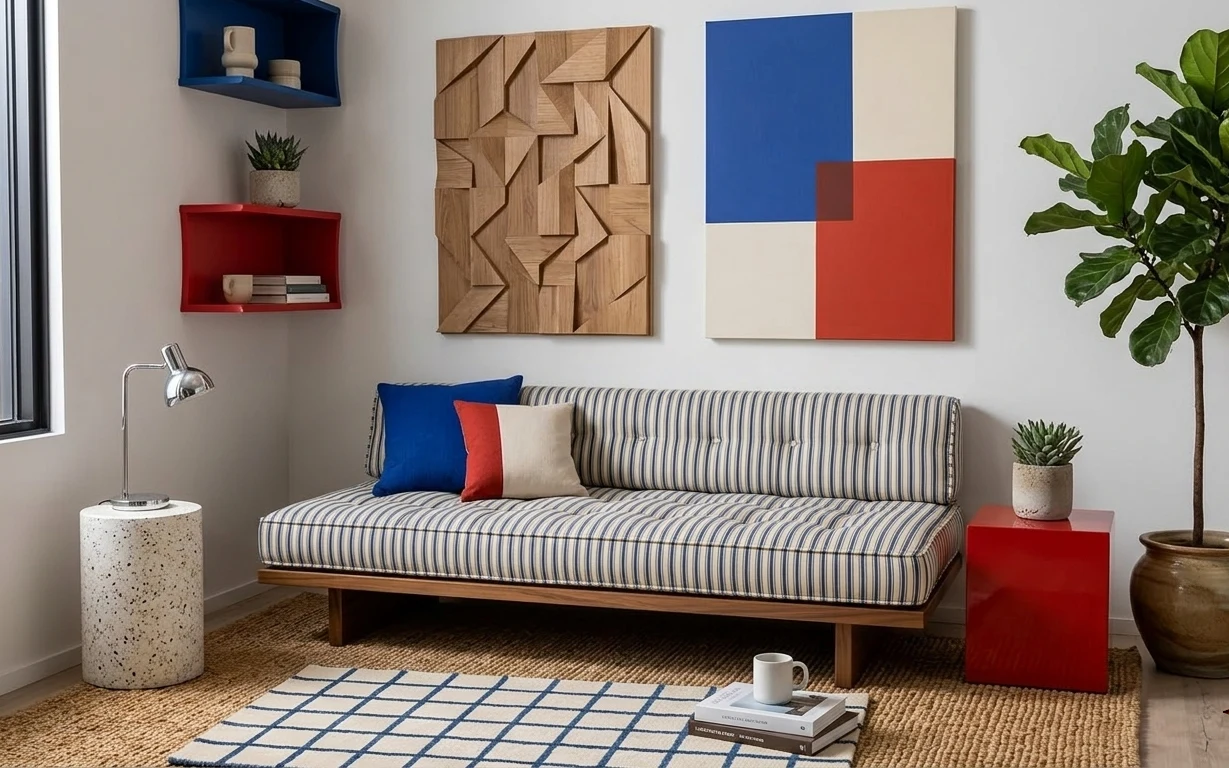
Under $400: 7 move-friendly swaps for a daybed nook
A $400 daybed nook refresh built for shared housing: jute underfoot, bold framed color, a plug-in lamp, and plants that pack out in a year.…
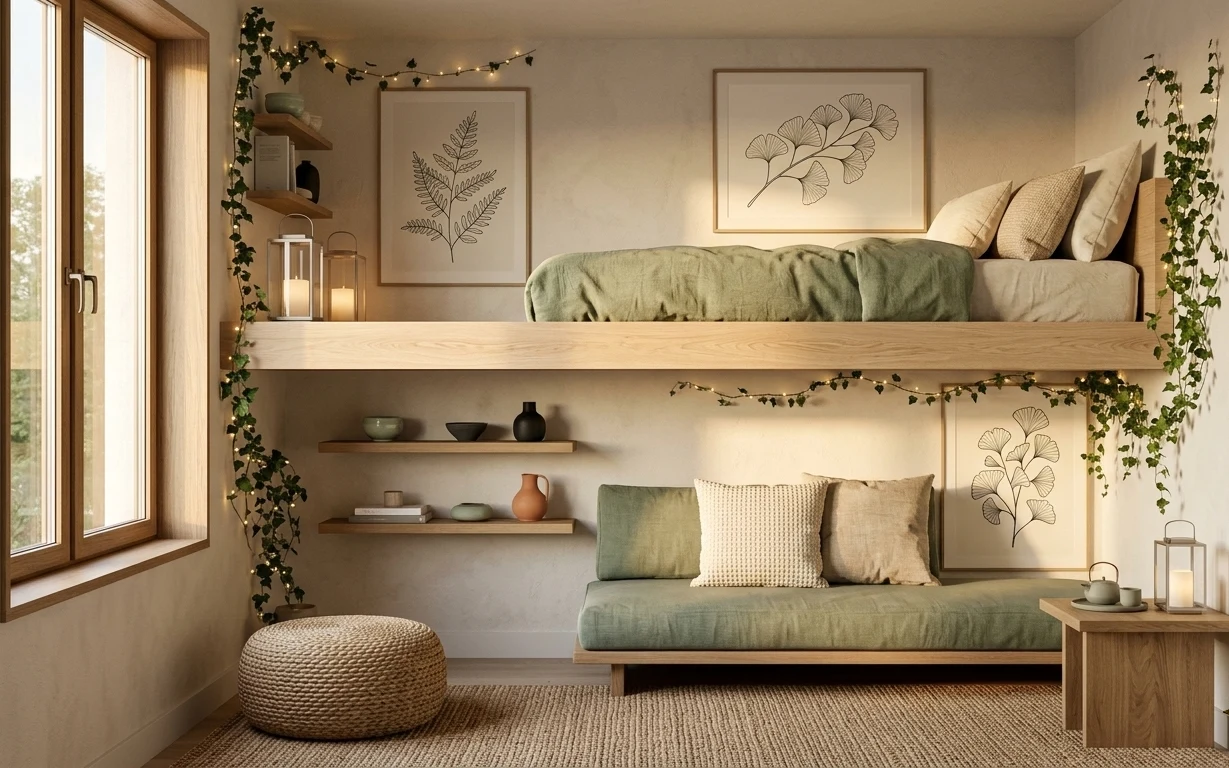
Under $700: japandi daybed nook refresh with weekend upgrades
A calm japandi daybed nook refresh you can pull off for under $700. Swap in one bold botanical frame, add warm string lights and a plush 5×…