- Best for
- warm, cozy bedroom lounge refreshes
- Time
- 1 weekend (plus a cure night)
- Total cost
- $770
- Renter-safe
- mostly yes (DIY paint only if you can repaint back)
Why warm terracotta bedside light is the bedroom lounge of 2026
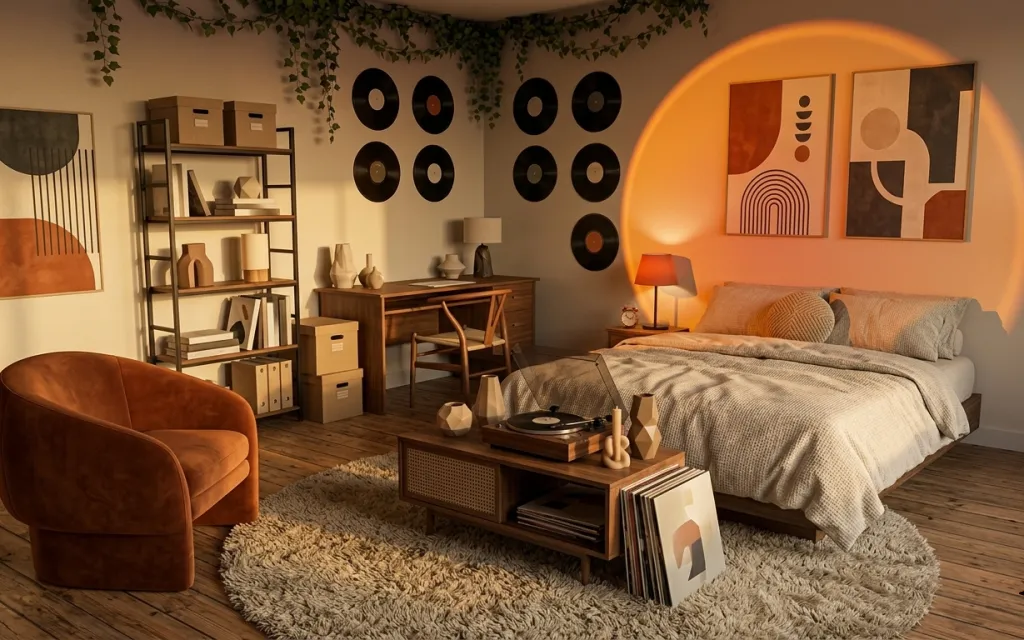
This room works because the textures do the heavy lifting: a shag rug anchors everything underfoot, and the gray knit throw and pillows soften the bed area without going matchy-matchy. I’m also obsessed with how the lamp’s orange shade warms up the neutrals, especially against light beige walls. You can see the mid-century modern energy in the wooden surfaces—coffee table, sideboard, and the ladder-style bookshelf all share a similar tone. As a homeowner, you can pick the highest-impact items first (rug + chair + lamp) instead of slowly nibbling at the details.
The mistake I made in my own place (more than once) was buying “pretty” art before the lighting and rug were settled. The result was always mismatched temperature—cool art against warm lamp light looked off. This time, start with the warm lamp glow and the rug texture, then choose wall art that can hold that orange note. After that, the rest is just stacking shapes: rounded chair edges, rectangular credenza lines, and circular vinyl accents.
Layer 1 — Shag rug ($180) soft underfoot, hides day-to-day mess
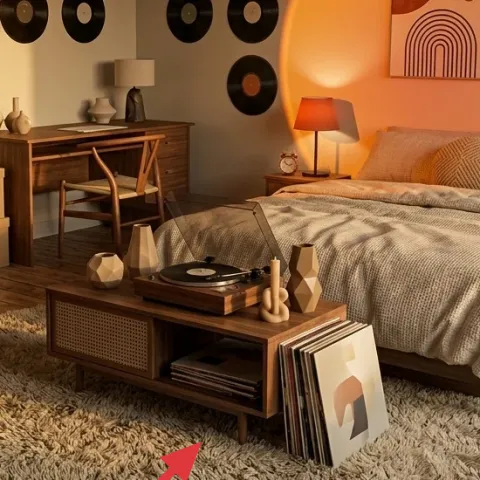
A shag rug is the quickest way to change how a bedroom lounge feels the second you step onto the floor. In the photo it reads warm and dimensional, which is exactly why it works with the gray bedding and the tan chair—soft texture balances soft colors. The obvious alternative is a flatweave rug, but that would make the room feel sharper and more echo-prone, especially with the wood plank floor. A shag does come with trade-offs: it’s best paired with regular vacuuming and the “no messy spikes” rule for pets. Still, for a weekend refresh, it’s the most noticeable comfort upgrade per dollar.
Vacuum with a slow pass
If the pile sheds at first, go slower and use the beater brush gently—most shag rugs settle in after a few cleanings.
Layer 2 — Tan velvet accent chair ($120) rounded comfort for a lounge corner
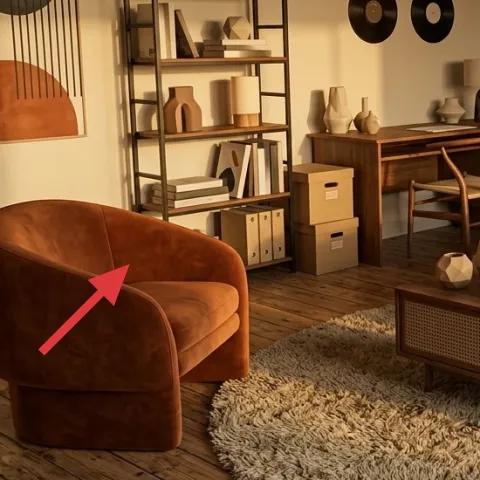
This tan velvet accent chair is doing two jobs at once: it creates a “pause point” near the bed and it adds a rounded silhouette that softens all the straight wood lines. The chair color also pulls from the lamp’s terracotta warmth, so everything reads like one palette instead of separate purchases. The trade-off is practicality—velvet shows lint and can snag if you’re not careful—but in a bedroom lounge (not a high-traffic dining room), it’s a reasonable choice. If you’ve been thinking of a simple fabric chair instead, go for velvet or a dense upholstery so the room stays cozy in the evening light.
Match undertones, not the exact color
You don’t need the chair to be the same orange-brown as the lamp—just keep it in the same warm family.
Layer 3 — Wood coffee table ($120) a low surface that keeps the bed area grounded
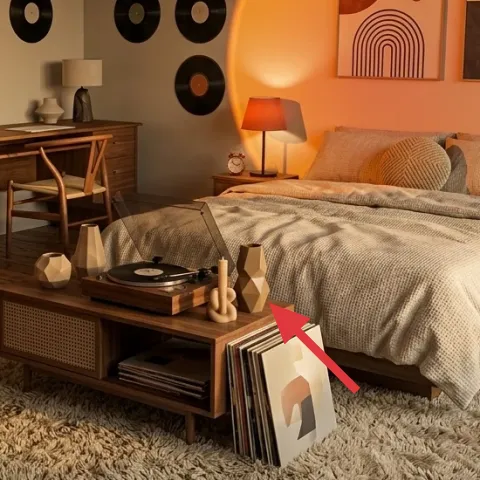
The wood coffee table is a subtle layout anchor: it gives the lounge a “center” between the chair and the bed, and it keeps visual weight low so the room doesn’t feel top-heavy. Because it’s wood, it ties the room together with the sideboard and bookshelf instead of feeling like an extra block of furniture. The obvious alternative is a black table, but that would fight the warm lamp glow and make the gray bedding feel heavier. This choice also accepts a trade-off: wood surfaces show fingerprints and can scratch if you move heavy items around, so use coasters or a simple tray when you’re setting drinks.
Style with one tray and a couple of heights
Use a tray for small items and add one taller object so the center feels intentional, not scattered.
Layer 4 — Ladder-style bookshelf ($120) vertical storage that looks open
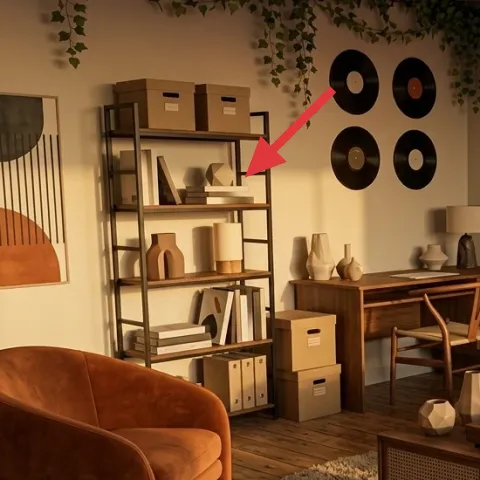
A ladder-style bookshelf works especially well in a bedroom lounge because it stores without visually boxing you in. In the photo, it sits to the left, giving height to the corner while still letting the light move across the wall. That’s the main trade-off versus a solid cabinet: you’re showing more of what’s on the shelves, so it only looks good when you keep categories together. The build also supports the room’s style cues—mid-century lines plus warm wood tones. If you’re choosing between a bookshelf and wall storage, pick the bookshelf first; it creates a backdrop for styling, not just a place for objects.
Don’t overfill every shelf
Leave breathing room—every extra item reduces the “designed” feel and makes the warm color palette look chaotic.
Layer 5 — Framed abstract art print (orange and black) ($60) repeats the lamp’s terracotta note
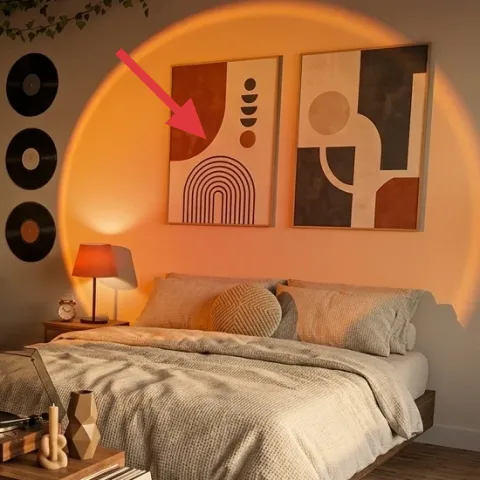
The framed orange-and-black abstract print is doing visual math in the best way: it echoes the lamp’s terracotta and keeps the room from turning into all neutrals. Because it’s graphic, it also gives the wall a focal point even with the vinyl record wall art set nearby. The obvious alternative is picking neutral-only art, but then the lamp becomes the lone orange note and everything starts feeling accidental. The trade-off is scale and spacing—too small or hung too high and it won’t “hold” the room. If you’re copying the look, choose a frame size that reads bold from the bed and keep the art level consistent across walls.
Hang art at eye level from the bed
When you’re lying down, you want the frame to land around your natural line of sight.
Layer 6 — Wood sideboard credenza ($120) the DIY paint layer that makes the room feel intentional
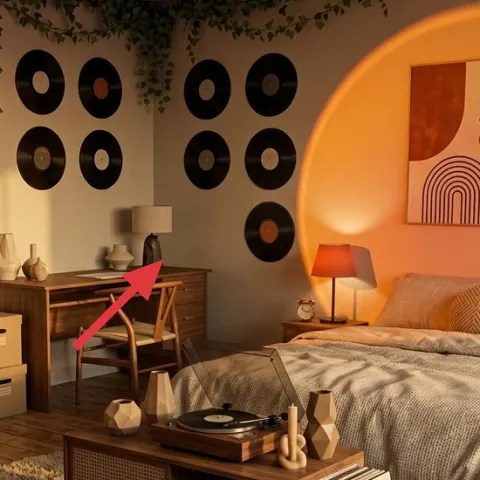
The wood sideboard credenza brings structure to the back half of the bedroom lounge, and it’s also the piece that takes the DIY paint best. In the photo, it carries the warm wood tone that connects the coffee table, bookshelf, and the lamp’s amber glow. If you swap only textiles and art, the room can still look incomplete because the “platform” furniture tone stays flat or dated. The trade-off with repainting is prep time—no shortcuts on sanding if you want the finish to look smooth. Still, changing a sideboard is one of the most satisfying weekend projects because it affects styling from every angle, not just one wall.
Make it instead of buying it
DIY-paint the wood sideboard credenza in a darker warm walnut tone so it matches the room’s terracotta-and-wood palette without buying a new piece.
Materials
- Bonding primer (for furniture/wood) — 1 can — home center — $20
- Warm walnut furniture paint (or cabinet paint) — 1 quart — home center — $25
- Sandpaper (120–220 grit) — assorted sheets — hardware store — $10
- Tack cloth — 1 pack — hardware store — $6
- Mini foam roller + angled brush set — 1 set — home center — $10
Steps
- Scuff-sand the surface lightly (aim for dull, not bare wood everywhere).
- Wipe down with a tack cloth to remove dust.
- Apply bonding primer in thin, even coats to corners and edges first.
- Let the primer cure fully, then sand with 220 grit for a smoother topcoat.
- Roll on the warm walnut paint in thin coats (brush details after each roll pass).
- After the final coat, let it cure undisturbed before styling.
Total DIY cost: $71 — saves about $49 over buying.
Layer 7 — Table lamp with orange shade ($50) warm pool of light right where you lounge
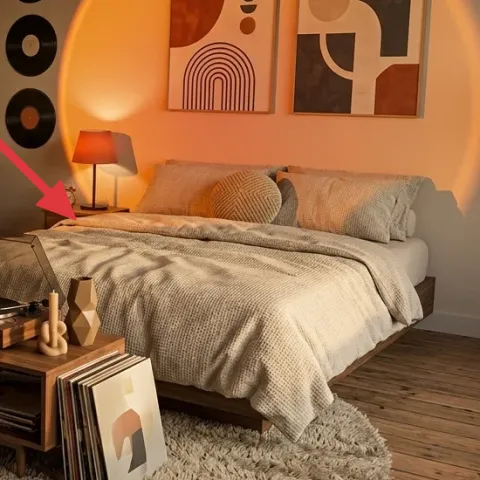
That orange-shaded table lamp is the mood maker: it warms the gray textiles and makes the wood tones look richer at night. The advantage here is simple—lighting changes how color reads more than almost any other upgrade, especially against light beige walls. If you were to choose a cool white bulb setup instead, the room would feel flatter and less cozy, and the orange art note would fight the lamp glow. The trade-off is bulb choice and shade scale: too bright and the lamp washes everything out. Aim for a warm bulb and a shade size that lets the glow fall gently on the bed-side area.
Use a warm bulb for consistency
A warm 2700K (or similar) bulb keeps the orange shade flattering to skin tones and fabrics.
The cost, layer by layer
| Layer | Item | Cost |
|---|---|---|
| 1 | Shag rug (5×7 style, warm neutral pile) | $180 |
| 2 | Tan velvet accent chair (rounded silhouette) | $120 |
| 3 | Wood coffee table (low rectangular table) | $120 |
| 4 | Ladder-style bookshelf (open shelving) | $120 |
| 5 | Framed abstract art print (orange and black) | $60 |
| 6 | Wood sideboard credenza (DIY-painted finish) | $120 |
| 7 | Table lamp with orange shade | $50 |
| Total | $770 | |
If you want a cheaper variant, swap the shag rug for a lower-pile textured rug and choose a simpler table lamp shade. Keep the tan chair and wood coffee table; those two carry most of the visual warmth even when the rug is more budget-friendly.
What worked, what didn't (across the whole room)
The biggest wins were comfort-forward pieces (shag rug, velvet chair) plus warm lighting that makes neutrals feel lived-in. The sideboard and bookshelf also worked together because their warm wood tones repeat across the layout.
What worked
- The shag rug softened the wood plank floor and made the lounge feel grounded from the bed.
- The tan velvet chair’s rounded edges balanced the rectilinear coffee table and sideboard.
- The orange-shaded table lamp warmed gray textiles and improved nighttime color balance.
- The framed orange-and-black art repeated the terracotta note so the room didn’t drift into neutrals-only.
- The ladder-style bookshelf added vertical storage without blocking light flow.
- Painting the sideboard in a deeper warm tone made the whole back half look styled, not temporary.
What didn't
- Velvet shows lint quickly, so the chair needs a consistent lint-roller habit.
- Wood tables pick up water rings if drinks sit directly on the finish.
- Overstyling the open bookshelf makes the room feel busy, especially with bold wall art nearby.
- Skipping warm lighting and relying on overhead light flattens the terracotta accents.
- Art hung slightly too high can fight the bed line instead of supporting it.
What we'd skip if we did it again
Skip adding more small décor before the big comfort pieces are in place. When the rug and seating feel right first, every candle, vase, and framed detail becomes easier to place. If you start with tiny objects, it’s too tempting to cover gaps with clutter instead of fixing the layout foundation.
Skip going too neutral with the lamp-and-art story. This room’s warmth comes from repeating terracotta through the lamp shade and the orange-accent art. If the art is purely cool or the lamp is a stark white bulb, the room reads mismatched even when the furniture looks good.
Skip rushing the sideboard paint prep. Even a great color choice can look uneven without proper sanding and primer. The weekend payoff is worth it, and the finished piece makes the rest of the styling look deliberate instead of “I’ll fix it later.”
Frequently asked
How long does a refresh like this usually take?
Plan on one weekend for the non-DIY shopping, styling, and basic swaps, especially if the rug and furniture are delivered. The only schedule pressure is the DIY-painted sideboard: sanding, priming, painting, and then letting it cure fully before putting items back on top. If you paint on Saturday, aim to style on Sunday night only after the surface feels fully set.
What if my bedroom is smaller than this one?
Shrink the footprint by choosing a smaller rug size and keeping the coffee table low and simple. If you go down in rug dimensions, prioritize the same texture (shag or textured pile) because it’s what makes the room feel soft. For wall art, keep one framed abstract print instead of multiple pieces competing for attention.
What if my bedroom is bigger and needs more structure?
Use the same palette, but scale the rug and pick a slightly larger coffee table surface area so styling doesn’t look too cramped. Consider a wider bookshelf or add one more functional shelf so you get visual rhythm across the wall. The lighting strategy should stay consistent: one warm lamp near the lounge area beats relying on overhead light alone.
Can this work if I’m renting?
You can copy most of the plan: rug, chair, coffee table, bookshelf, and a warm table lamp are all renter-friendly. The one part that’s trickier is painting the sideboard credenza—only do that if you can repaint back later or if it’s furniture you can take with you. If you can’t DIY paint, keep the sideboard’s current finish and focus on rug + lamp + one bold framed print.
Where should I shop differently to keep the budget realistic?
For the chair and coffee table, thrift or resale marketplaces often beat big retailers while keeping the warm wood + rounded silhouette. For the lamp shade and framed print, look for mid-century style lines and warm undertones rather than exact matches. If the rug is the splurge, choose the best-reviewed option in a similar warm neutral so you don’t regret pile height.
What’s the biggest mistake people make in a bedroom lounge setup?
The biggest miss is buying matching-looking furniture sets instead of building a palette around how the room feels at night. Warm lighting and a textured rug do more for comfort than perfectly coordinated pieces. Another common error is hanging art without checking how it aligns with the bed when you’re lying down.
More in Bedroom
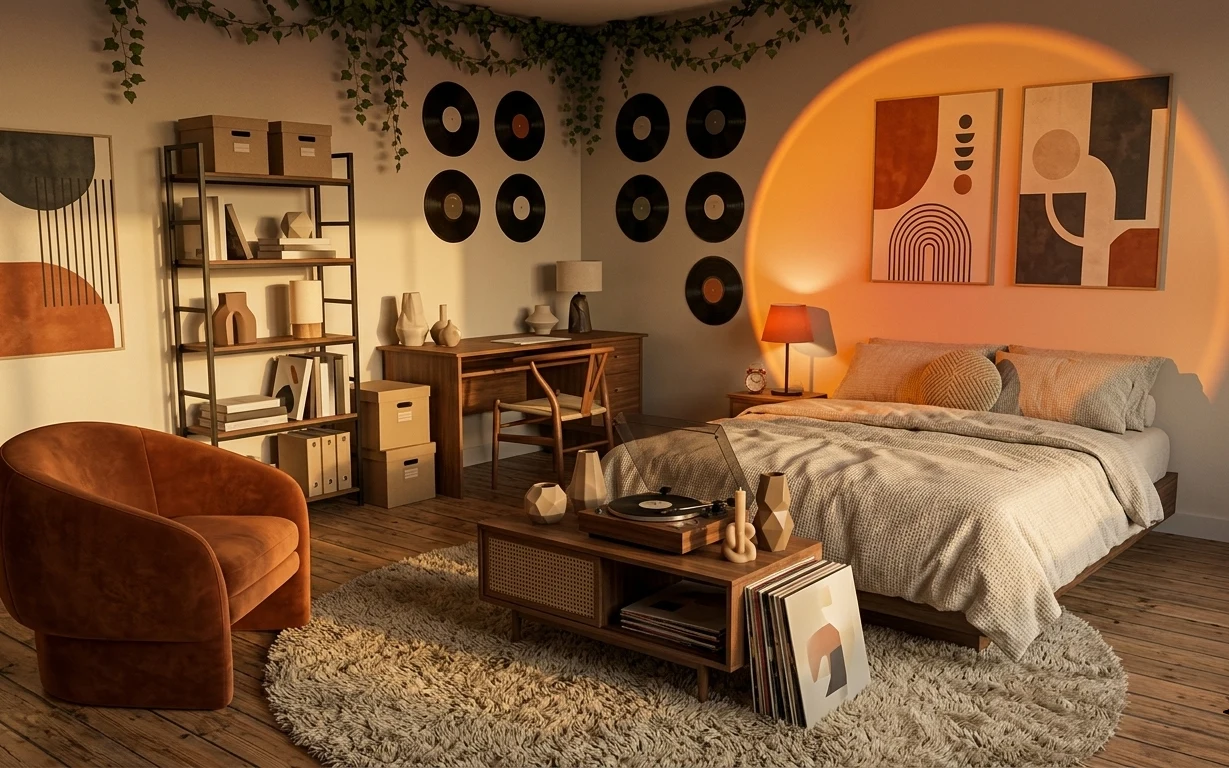
Under $800: warm terracotta bedroom lounge refresh with 7 layers
A warm terracotta bedroom lounge refresh for homeowners, built from 7 specific upgrades totaling $770. Focus: a shag rug underfoot, a tan v…
Under $1000: brass-arched bedroom nook refresh
A brass-arched bedroom nook can look finished without a full remodel. With 7 budget-friendly swaps that total $915, you can add a high-impa…
Under $400: botanical bedroom refresh with move-ready swaps
A bedroom refresh that copies the hero’s botanical feel with move-ready swaps and no drilling. This plan keeps the total under $400 and foc…