- Best for
- turning tile-heavy bathrooms into a calmer corner
- Cost
- about $300 for the full look
- Difficulty
- easy, mostly styling swaps
- Renter-safe
- yes—textiles, tray, and planters only
Why jade-green calm is the tub-and-vanity corner of 2026
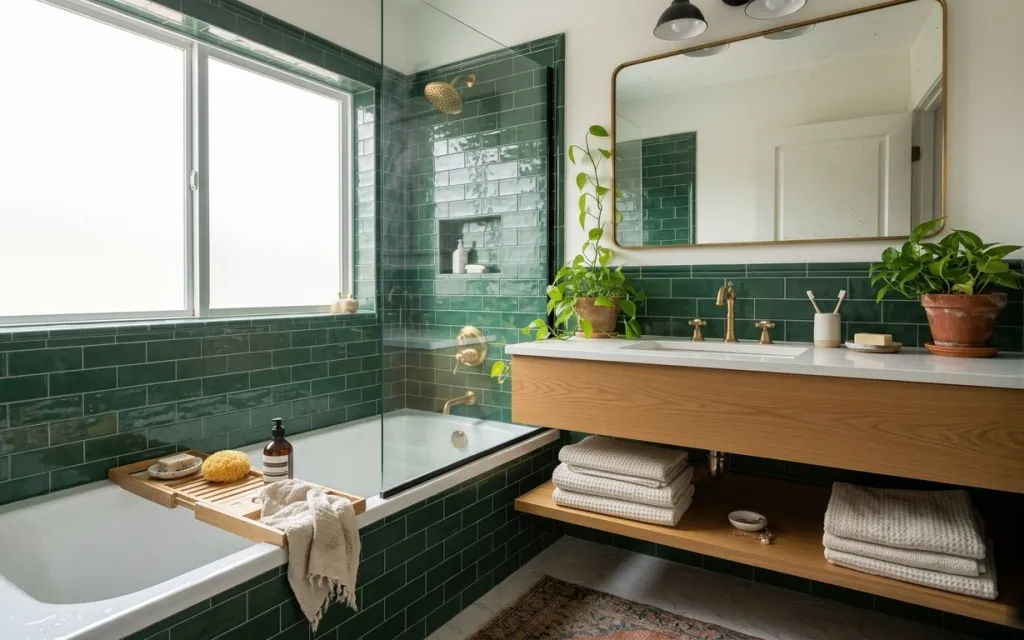
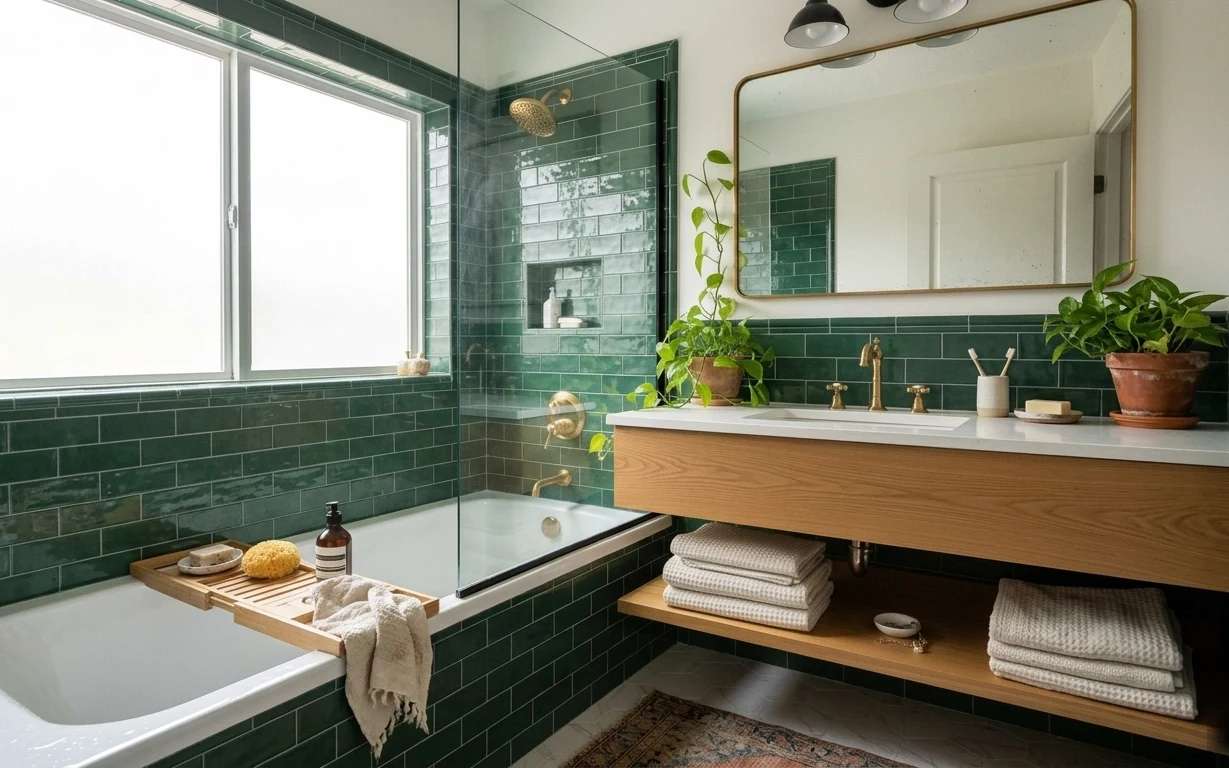
The starting point here is the dark green tile, then everything else stays quiet: warm wood, bright white surfaces, and soft neutrals that don’t compete with the wall. Notice the cream hand towel draped on the wooden tray, plus the stacked towels on the bench—textures do the heavy lifting. The rug grounds the whole zone, while the plants add that spa-ish lift you usually need candles for. For renters, this works because every change is either textile, a freestanding tray, or a movable planter.
I used to overdo bathroom decor by treating it like a living room—too many matching items, not enough negative space. In this setup, the “less but better” rule is what clicks: one tray moment, two towel heights, and plant placement that visually balances the mirror. The first time I tried this, I forgot to check the sightline from the doorway—turns out towel stacks matter as much as the rug does.
Layer 1 — bathroom rug (textured, earth tone) ($80) Underfoot comfort that hides everyday mess
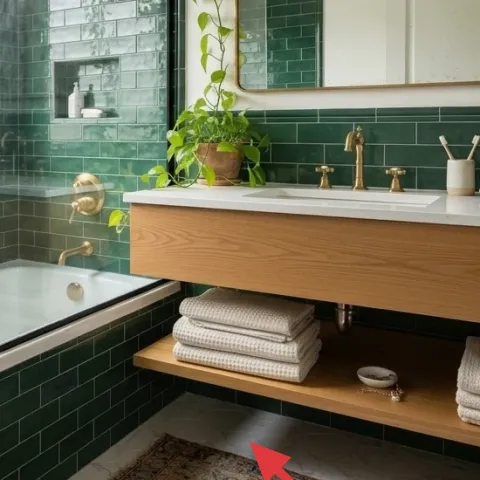
A bathroom rug in an earthy neutral gives the floor a softer landing, and it’s especially helpful on light tile where water spots show up. In the photo, the rug sits in front of the bench zone, so your eye reads it as “the place” instead of scattered towels and plant pots. Choose something textured (like woven or boucle-like) rather than flat—texture disguises footprints better between washes. The trade-off is that you’ll want to shake it out regularly, but it’s the cheapest way to make tile feel warmer.
Layer for grip
If the rug slides, add a removable rug pad so you don’t need to constantly adjust it after stepping out of the tub.
Layer 2 — hand towel on tray (cream/beige) ($30) One folded line that makes the tray look intentional
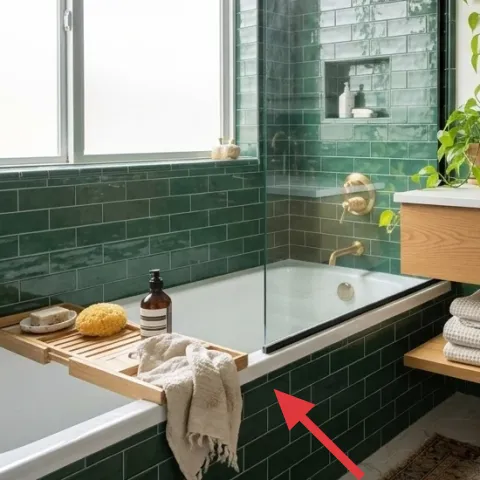
This hand towel draped over the edge of the wooden bath tray is doing two jobs: it adds softness next to the shiny bathtub and it makes the tray feel used (not staged). Keep the color in the same family as the towels stacked on the bench—cream/beige reads calm against dark green tile and warm wood. The alternative would be a fully folded towel, but it can look too “laundry day.” Draping takes less space and adds that relaxed spa texture. The trade-off: drapes need a quick shake-out after each real use.
Match the towel temperature
Cool whites can look gray next to green tile; cream/beige keeps the whole corner feeling warmer.
Layer 3 — wood bath tray on bathtub rim ($35) A freestanding organizer that turns a ledge into a vignette
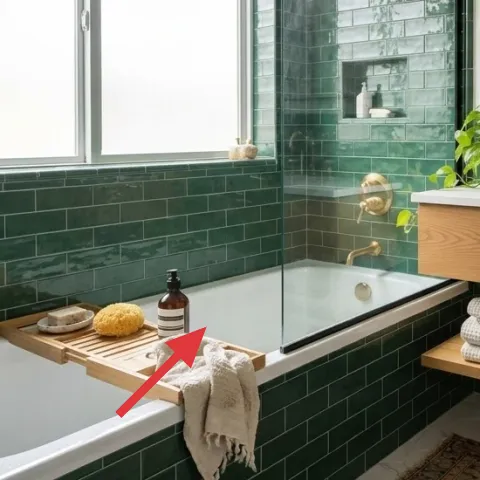
The wooden bath tray is the structure behind the styling: it creates a defined “island” on the tub rim where smaller items can live. Wood also repeats the vanity’s warm tone, so even though you’re not changing the tile, your brain reads a cohesive material story. The obvious alternative is leaving the soap and extras loose on the counter, but that makes everything look cluttered fast. With a tray, you can rearrange for seasons without redoing your whole bathroom. Trade-off: you’ll need to keep it dry after showers so the finish doesn’t dull.
Use the tub rim like a shelf
A low, tray-forward setup works best because it keeps items visible without blocking access to the faucet area.
Layer 4 — soap bottle and small bar on tray ($15) Small details that look curated instead of random
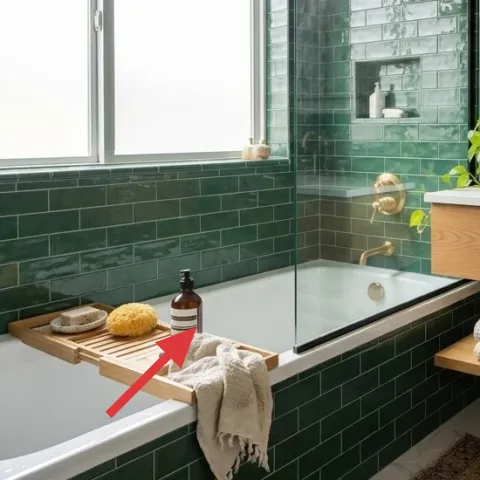
That simple cluster—soap bottle plus a small bar—turns the tray into a functional moment. In a bathroom with bold tile, smaller visual elements are what you can change without fighting the room’s color. Keep shapes and tones consistent: one pump bottle for height, plus one compact bar or soap-dish piece so the tray doesn’t become a “science project” of different containers. The alternative would be buying a full matching set, but it’s usually overpriced and hard to keep looking varied. Here, the trade-off is choosing fewer pieces, more intentionally.
Don’t pick glossy labels
If labels are bright or high-contrast, they’ll fight the calm greens—go for neutral-toned packaging instead.
Layer 5 — white ceramic planter pot with green plant ($25) A bright counterpoint to dark tile
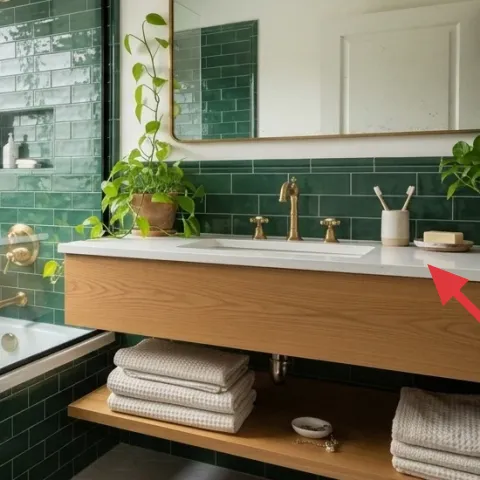
The white ceramic planter pot lightens the whole corner and gives the plants a “clean” frame against the green tile. It’s also a visual reset between the countertop’s busy details and the bench’s towel stacks. A white pot reads fresher for renters because you can switch plants without changing the container. The alternative is using only terracotta, but that can skew too heavy next to dark walls. The trade-off: ceramic needs a simple wipe-down after watering so mineral residue doesn’t build up around the rim.
Place for balance, not symmetry
Set it slightly off-center relative to the towel stacks so the corner feels styled, not arranged by a checklist.
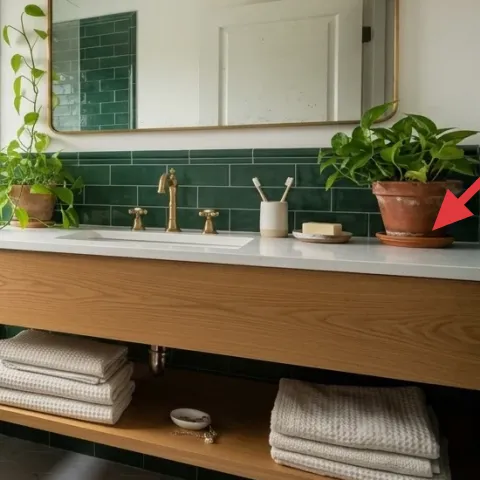
Layer 6 — terracotta planter pot (paintable) ($40) One planter color story that still fits renters
Make it instead of buying it
Paint a terracotta planter pot (and add it to a cluster like the photo) so the color reads intentional against dark green tile.
Materials
- Terracotta planter pots — 2 small pots — $15
- Acrylic paint (main color) — 1 small bottle — $10
- Foam brush — 1 pack — $3
- Painter’s tape — 1 roll — $2
Steps
- Wash and dry the terracotta thoroughly so paint sticks evenly.
- Lightly mask any areas you don’t want painted with painter’s tape.
- Paint a thin first coat with a foam brush; let it dry fully.
- Add a second coat for coverage; keep the strokes consistent.
- Let the paint dry completely again.
- Remove tape gently to keep crisp edges.
- Set pots aside to cure in a dry spot until fully hard to the touch.
- Place a plant and confirm water won’t sit at the painted bottom edge.
Total DIY cost: $30 — saves about $10 over buying.
Layer 7 — folded bath towel stacks on bench ($45) Two towel heights for a steadier visual rhythm
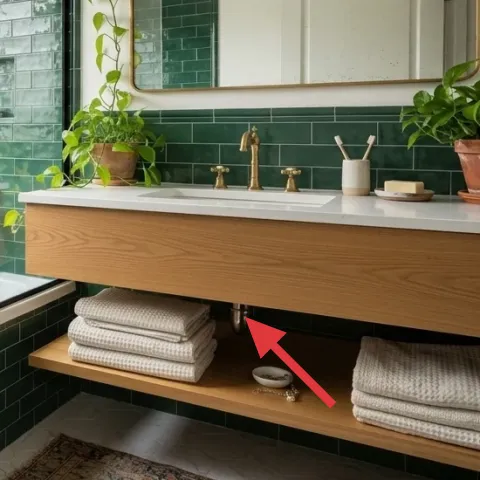
The folded towel stacks on the bench create that “spa closet” feeling without adding any new fixed fixtures. In the photo, you’ve got towel stacks at two levels—one higher and one lower—so the bench reads styled even when you’re not using it. The material is soft and absorbent, and the neutral tones keep the dark green tile from looking too intense. If you only fold towels once, the corner can feel flat; stacking at different heights adds depth. The trade-off: you’ll want to refold every few days to keep the edges crisp.
Keep the folds uniform
Use the same fold size across both stacks so the bench looks curated, not accidental.
The cost, layer by layer
| Layer | Item | Cost |
|---|---|---|
| 1 | Bathroom rug (textured, earth tone) | $80 |
| 2 | Hand towel on tray (cream/beige) | $30 |
| 3 | Wood bath tray on bathtub rim | $35 |
| 4 | Soap bottle and small bar on tray | $15 |
| 5 | White ceramic planter pot with green plant | $25 |
| 6 | Terracotta planter pot (DIY painted) | $40 |
| 7 | Folded bath towel stacks on bench | $45 |
| Total | $270 | |
Cheaper variant: swap the rug for a smaller, simpler low-pile mat ($45), use fewer towel pieces (one stack instead of two: $25 total), and choose one plant in a single pot ($15). Keep the tray—its visual structure is what makes the styling look intentional.
What worked, what didn't (across the whole room)
The look lands because it uses removable softness (rug + towels) to balance bold tile, then adds small, moveable details on a tray. Plants and terracotta keep the corner from feeling sterile, while warm wood repeats the existing materials.
What worked
- The rug adds warmth and traction in front of the bench zone.
- Draping a hand towel on the tray makes the countertop moment feel lived-in.
- The wooden tray creates a “designed” vignette where small items belong.
- Neutral towel stacks at two heights add depth without extra decor.
- White ceramic planters brighten the corner against dark green tile.
- Terracotta adds earthy warmth and pairs naturally with wood tones.
What didn't
- Over-matching everything (same size, same angle) made the corner feel too rigid.
- Choosing glossy, high-contrast soap packaging pulled focus from the tile.
- Leaving towels all the same height flattened the visual rhythm on the bench.
- Neglecting to dry the tray after use dulled the wood over time.
What we'd skip if we did it again
Skip “everything coordinated” sets (towels, soap, trays) where every piece matches perfectly. In a room with strong dark-green tile, matching too hard can read costume-like. Pick one anchor material story—wood plus neutral textiles—then let small items vary slightly in shape.
Skip buying a second rug that duplicates the same function. If the goal is warmth and a landing spot, one textured mat in front of the bench zone is enough. Extra rugs often create clutter lines and make towels and plants compete for attention.
Skip relying on plants alone for the spa vibe. A single plant looks nice, but it doesn’t handle comfort the way towels and a rug do. The most renter-friendly formula here is: rug + towel heights + one tray moment + two pots.
Frequently asked
How long does this bathroom refresh take?
Plan for about 60–90 minutes. Most of the time is sorting the towel stacks and deciding where the tray and plants should sit so the corner feels balanced from the doorway. If you DIY the terracotta pot, add another 1–2 hours for drying between coats (you can do it while towels are washing).
What if my bathroom is smaller than the photo?
Keep the structure, shrink the scale. Use a narrower rug and keep just one towel stack visible (either the higher or lower tier). For plants, choose one pot with taller stems or a slightly wider pot to avoid crowding. The tray can stay—its job is organizing the countertop moment.
What if my bathroom is bigger and needs more presence?
Add one more repetition, not more variety. For example, keep the same towel color family and repeat the tray concept with another small wood organizer on the bench. If you add a second plant, match the pot language (white ceramic or painted terracotta) so the corner stays cohesive.
Where’s the best place to shop for these renter-safe pieces?
For the rug and towels, focus on retailers with easy returns since bathroom textures matter. For planters and trays, look for home goods stores or discount home sections—terracotta is often cheaper there, which makes the DIY option more worthwhile. Any place with neutral-toned soap bottles and minimalist packaging can work.
What’s the biggest mistake renters make with bathroom styling?
Overbuying decor that competes with tile. When walls already have bold pattern or color, the “visual budget” should go to textiles (rug + towels) and a few purposeful objects (tray + plants). Too many small bottles and mismatched containers turn a spa corner into a countertop swap meet.
Is this really move-friendly when the lease ends?
Yes. Everything here is either soft goods (rug and towels) or freestanding items (tray and planters). Pack the rug and towels like any other textiles, and lift plants carefully—no permanent changes required. Even the painted terracotta pot can come with you, and it can be repainted later if you switch your palette.
More in Bathroom
What $300 buys: a renter-friendly tub-and-vanity corner refresh
A renter-friendly bathroom tub-and-vanity corner refresh built around deep-green tile and warm wood—no drilling, no permanent changes. For …
How to refresh a walk-in shower bathroom for under $400
A walk-in shower bathroom refresh that stays move-ready and no-drill-friendly on a $400 budget. Swap in warm textiles, a few countertop/sho…
How to style a bathroom vanity wall for $500
A teal-and-wood bathroom vanity wall gets a calm, japandi feel on a $500 refresh plan. Swap in a round rattan mirror, update the faucet, an…