- Best for
- Warm color + quick focal-point swaps
- Cost
- $420 total
- Time
- One long weekend
- Renter-safe
- Some parts are renter-friendly (textiles), vanity paint is not
Why terracotta-and-brass weekend swaps are the bathroom refresh of 2026
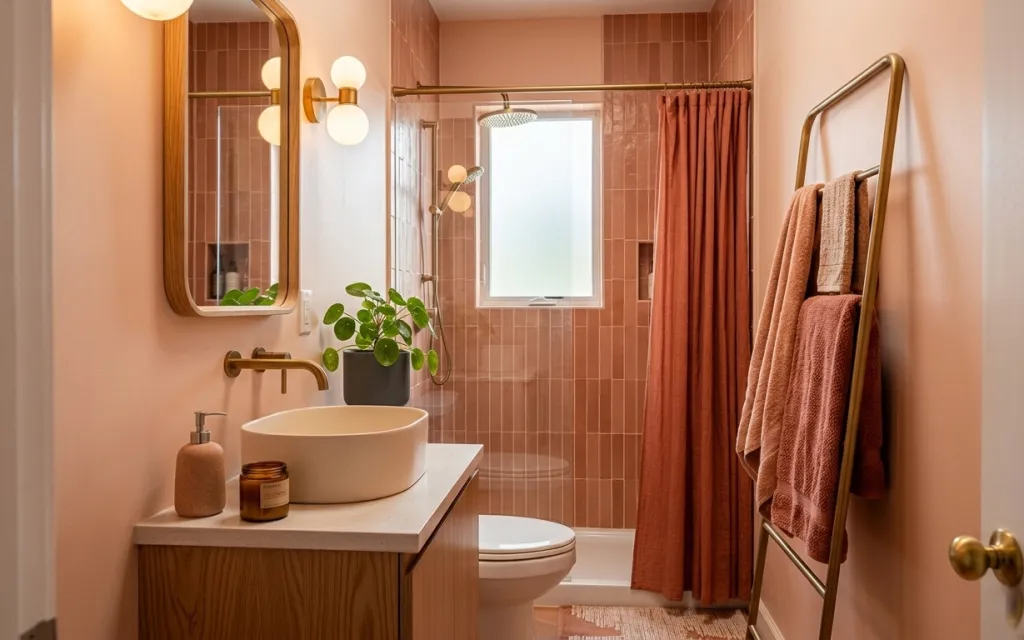
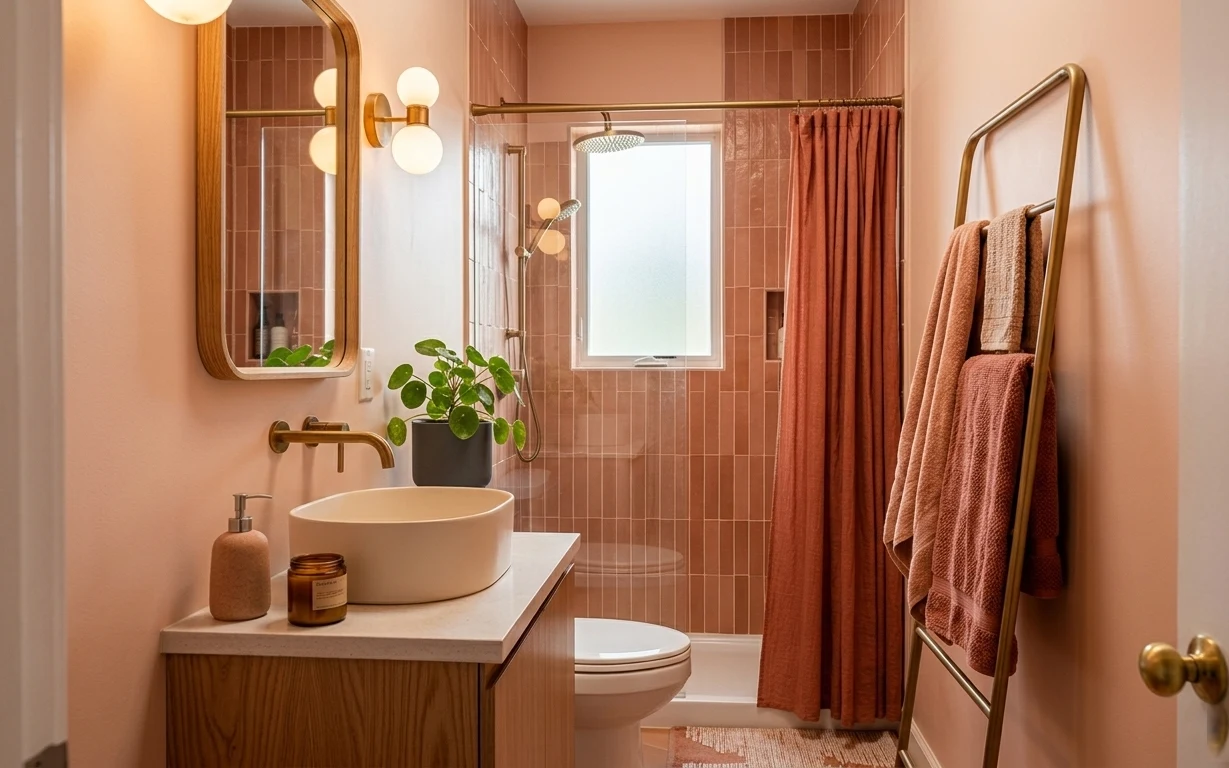
Start by treating this space like a color study: terracotta reads rich against cream, brass adds shine without going flashy, and the tile backsplash gives you an easy, repeatable rhythm. In the photo, the vanity’s wood grain, the soft woven curtain, and the matte terracotta bath rug all mix well once you commit to a warmer finish. This is an achievable homeowner refresh because none of the big moves involve demolition—just swapping the visible “set dressing” and repainting a surface you already own.
I used to underestimate how much a bathroom depends on textiles. On my first place, I replaced a mirror and called it done—then I realized the rug and curtain still dragged the palette cool. Seeing the terracotta curtain and brass mirror together here is the reminder: the room needs one clear temperature cue. Painting the vanity cabinet doors makes that cue feel connected from sink height down to the floor.
Layer 1 — bath rug ($80) grounds the open floor area
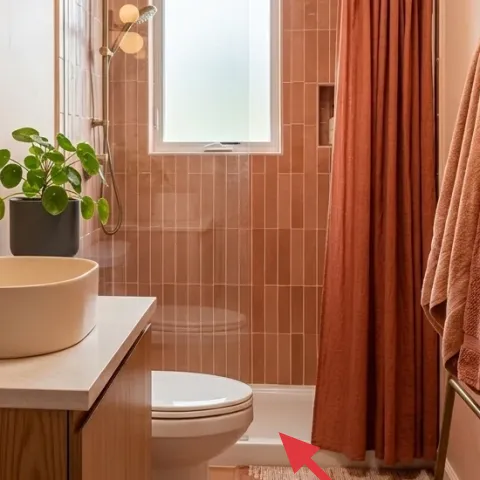
The bath rug sits in front of the tub edge and visually “lands” the room, which is especially important when you already have smooth tile and glossy bathroom fixtures. This is one of those purchases that feels small until you notice how it stops the eye from bouncing straight across the white-and-cream surfaces. Choose a terracotta or warm neutral rug with a flat weave so it doesn’t fight the tile texture behind the vanity. A thicker, shaggy rug looks cozy, but it’s harder to keep crisp in a high-moisture zone.
Pick fibers that dry quickly
Look for a rug that can handle damp air without staying squishy for days—fast-dry materials make the color look better for longer.
Layer 2 — terracotta shower curtain ($80) adds the temperature cue
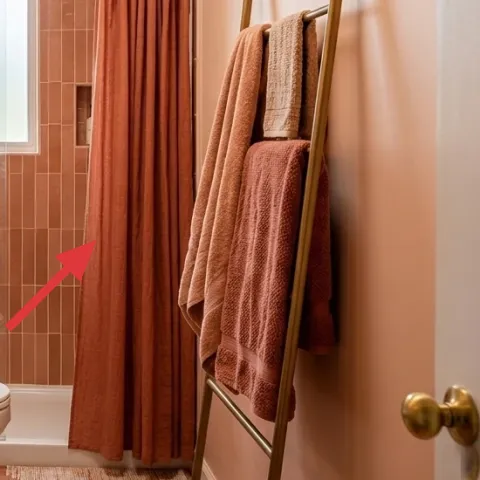
The terracotta shower curtain is doing real work here: it brings warmth to the back wall and gives the whole bathroom a single, repeatable hue. Because the curtain is a vertical plane, it also makes the space feel taller and more intentional than a plain white panel would. Go for a heavier fabric that hangs with soft folds (not something clingy), and make sure the terracotta reads more clay than pink. The trade-off is that brighter curtains show lint and water spots sooner, so plan to rinse or wash on a regular schedule.
Match the undertone, not the exact shade
Warm brass and terracotta get along best when the orange is slightly muted—too rosy will fight the vanity’s wood.
Layer 3 — large arched wall mirror ($90) lifts the whole palette
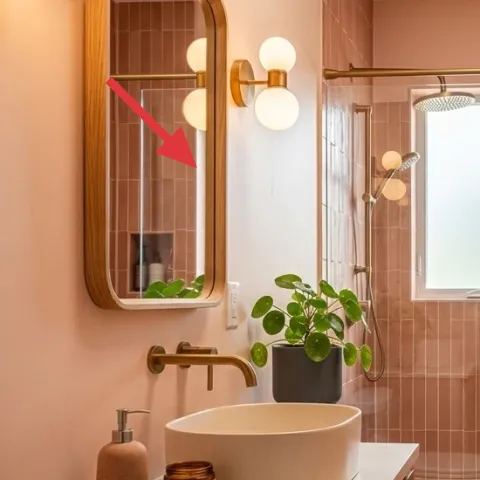
An arched mirror changes the geometry of a bathroom instantly. Here, the mirror’s curved shape plays nicely with the round, soft-edged lighting and keeps the room from feeling boxy next to the tile grid. It also makes the vanity area read more styled because it frames the sink zone like a focal point. If you buy a rectangular mirror instead, you’ll lose that gentle “spa” silhouette and the room will feel more utilitarian. The compromise: arched mirrors cost a little more than basic rectangles, but they pay off every time you check your face in the morning.
Keep the frame finish in the same family as the fixtures
Warm brass tones in the sconce and the mirror frame make the room look cohesive without matching every single metal perfectly.
Layer 4 — paint for the wood vanity cabinet doors (DIY) ($70) ties wood to the terracotta palette
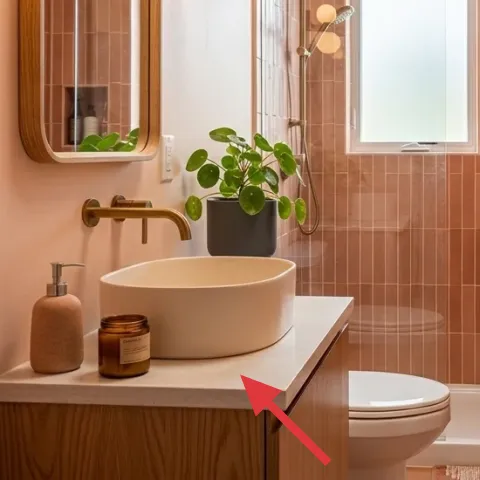
Make it instead of buying it
DIY-painting the vanity cabinet doors is the quickest way to connect the wood base to the warm terracotta + brass look in the photo.
Materials
- Interior paint, satin or eggshell — 1 quart to 1 gallon — home improvement store — $40
- Primer for slick surfaces (tinted if possible) — 1 quart — home improvement store — $8
- Foam roller + angled brush set — 1 set — home improvement store — $12
- Sandpaper (120/220 grit) + tack cloth — 1 kit — home improvement store — $5
Steps
- Sand the cabinet doors lightly to scuff the finish, then wipe with tack cloth.
- Prime the fronts and edges; let the primer dry fully.
- Roll large door panels and brush corners; apply the first coat and let it dry.
- Lightly sand between coats for a smooth finish, then apply the final coat.
- Reinstall hardware and set the doors aside to cure before heavy daily use.
Total DIY cost: $65 — saves about $5 over buying.
Don’t rush the cure on surfaces that get wet
If the vanity doors get splashed during daily routines, give the paint more time than “dry to touch” before you go full-speed.
Layer 5 — towel ladder ($60) creates a practical vertical styling moment
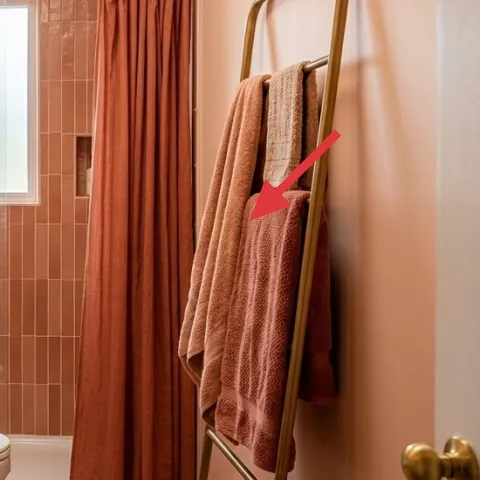
A towel ladder gives you vertical rhythm in a bathroom that already has a lot of rectangles—mirror, window, tile grid, and tub wall. In this setup, it also makes the towels part of the design instead of something hidden in a cabinet. Choose one with a warm metal finish that echoes the brass lighting so the tones look coordinated. The visible towels help, but if your towels are too light or too cool-toned, the ladder will look “separate.” The trade-off is that ladders take a little floor-space footprint, so place it where it won’t feel like an obstacle between the door and vanity.
Let the towels do the color work
Pick one towel color you can repeat on laundry days so the ladder looks intentional between washes.
Layer 6 — green leafy plant in black pot ($25) adds life near the sink
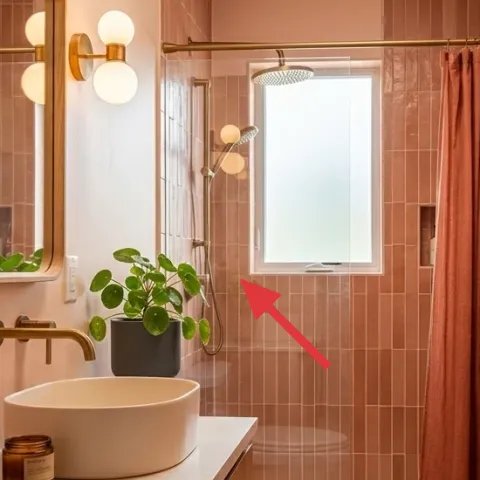
A leafy plant near the vanity makes the whole room feel less staged and more lived-in. The black pot matters too—it’s a grounding neutral against the cream walls and keeps the greenery from blending into tile. In a bathroom with warm lighting, the leaves also reflect that soft glow, so you get a subtle highlight when you’re at the sink. The “obvious alternative” is skipping plants entirely, but that’s how you end up with a perfectly styled yet slightly cold room. The trade-off is maintenance: bathrooms can be too dry or too humid, so choose a plant that tolerates your airflow and light.
Wipe leaves once a month
Bathroom dust settles quickly around warm bulbs—quick wipe-down keeps the plant looking crisp.
Layer 7 — ceramic jar on the vanity ($15) makes the countertop feel finished
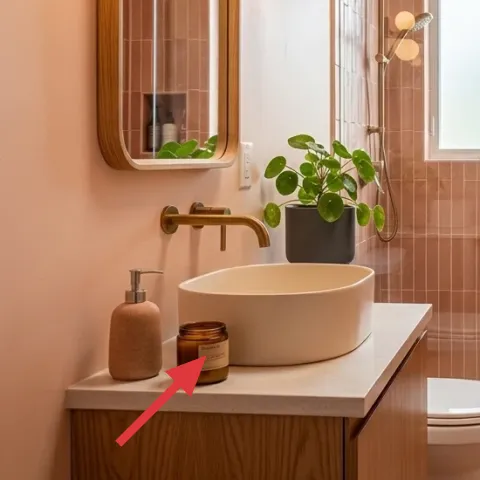
A single ceramic jar on the vanity turns “random bottles” into a small, deliberate vignette. In the photo, the jar’s warm, earthy look pairs naturally with the soap dispenser and the terracotta curtain, so it doesn’t feel like extra clutter. This is a low-cost layer that improves the first impression every time you open the door—your eye lands on the sink zone and immediately reads order. If you choose a jar that’s too shiny, it will compete with the brass lighting. If it’s too pale, it can look washed out against the tile.
Keep countertop heights varied
One taller bottle plus one shorter ceramic piece gives a more “styled” silhouette than matching everything in a straight row.
The cost, layer by layer
| Layer | Item | Cost |
|---|---|---|
| 1 | Bath rug in a warm terracotta tone | $80 |
| 2 | Terracotta shower curtain (panel set) | $80 |
| 3 | Large arched wall mirror | $90 |
| 4 | Paint + primer for wood vanity cabinet doors (DIY retail-equivalent) | $70 |
| 5 | Towel ladder | $60 |
| 6 | Indoor plant (green leafy) in black pot | $25 |
| 7 | Ceramic jar for vanity styling | $15 |
| Total | $420 | |
If the budget needs to land closer to the low end, swap to a simpler bath rug and pick a lighter-weight curtain fabric in the same terracotta family. You still get the warm temperature cue and mirror focus without paying for fancier materials.
What worked, what didn't (across the whole room)
The biggest wins come from choosing one warm palette and then repeating it in the three “touch points”: textiles, mirror, and vanity. The result looks intentional even before you add extra decor. The main downside of this kind of refresh is maintenance—warm fabrics and painted surfaces both need a little upkeep to stay looking fresh.
What worked
- The terracotta curtain gives a clear warm undertone against cream walls and keeps the room from reading cold.
- The arched mirror adds softness and makes the vanity zone feel like a designed focal point.
- The bath rug reduces the visual harshness of tile and makes the floor feel complete.
- A towel ladder makes towels part of the styling instead of an afterthought.
- A green plant brings life near the sink without adding visual clutter.
- Painting the vanity doors connects the wood tones to the terracotta palette more cleanly than leaving them natural.
What didn't
- Warm terracotta fabrics can show lint and water spots faster, so plan for quick wash cycles.
- Painted vanity doors can scuff if they aren’t fully cured before regular wet use.
- A towel ladder placed too close to the entry path can feel like a constant obstacle.
- A plant that’s not suited to bathroom light may look sparse by week three, even if it’s healthy.
What we'd skip if we did it again
Skip replacing hardware, faucets, or the mirror’s lighting setup first. Those upgrades might look bold on paper, but the room’s temperature cue comes faster from textiles, one focal mirror, and the vanity cabinet finish.
Skip buying a second, “extra” rug in a different color family. Bathrooms look best when the floor covering repeats the curtain warmth—one correct choice beats two mismatched ones.
Skip a plant with fussy care requirements. In a bathroom, light and humidity can swing, so choose a hardy leafy plant that can handle your routine without constant adjustments.
Frequently asked
How long does this bathroom refresh take?
Plan for a long weekend. Textile swaps (rug, curtain) and styling items are quick—often a few hours. The only time sink is paint: sanding, priming, and two coats, plus cure time for the vanity doors before regular splashes. If you can dry overnight, the timeline is usually smooth.
What if I rent and can’t paint the vanity?
Keep the same palette and skip the cabinet paint. Swap in the rug, terracotta curtain, and vanity styling jar first, then consider removable peel-and-stick wallpaper behind the sink or a temporary mirror frame update if your lease allows. The visual change still comes through because textiles and the mirror drive the room’s warmth.
My bathroom is smaller—will this still work?
Yes, but adjust scale. Choose a bath rug that fits your floor area without creeping under the vanity too much, and keep the curtain fabric medium-weight so it hangs cleanly. A large arched mirror is especially helpful in smaller bathrooms because it pulls focus upward and makes the room feel lighter.
What if my bathroom has cooler tile or more gray walls?
Lean harder into warm undertones—look for terracotta that reads more clay than pink, and pick a rug and towel color that repeats that warmth. Brass-finish accessories help too, but the key is temperature consistency: one dominant warm cue repeated across curtain, textiles, and the vanity finish.
Where should I shop for the rug and curtain so they match?
Start with the curtain shade you want, then shop the rug to echo it rather than matching exact color codes. If you can, buy the curtain and rug from the same retailer or brand line so undertones stay consistent. For the mirror, aim for a warm frame finish that visually matches the existing sconce metal.
Biggest mistake to avoid in this kind of refresh?
Buying one statement item and leaving everything else neutral. If the curtain is terracotta but the rug and vanity stay cool, the room will feel like mismatched “pieces,” not a cohesive setup. Repeat the palette in at least two touch points: textiles plus the sink zone.
More in Bathroom
What $500 buys: a terracotta-and-brass bathroom refresh
A terracotta shower curtain, warm-toned vanity paint, and a bold arched mirror make this bathroom feel intentional again. This weekend refr…
7 renter swaps for a retro bathroom refresh, $400
A retro bathroom refresh for renters on a $400 budget: swap in a soft black bath mat, style beige towels and flip-flops, and add no-drill b…
What $300 buys: a renter-friendly tub-and-vanity corner refresh
A renter-friendly bathroom tub-and-vanity corner refresh built around deep-green tile and warm wood—no drilling, no permanent changes. For …